
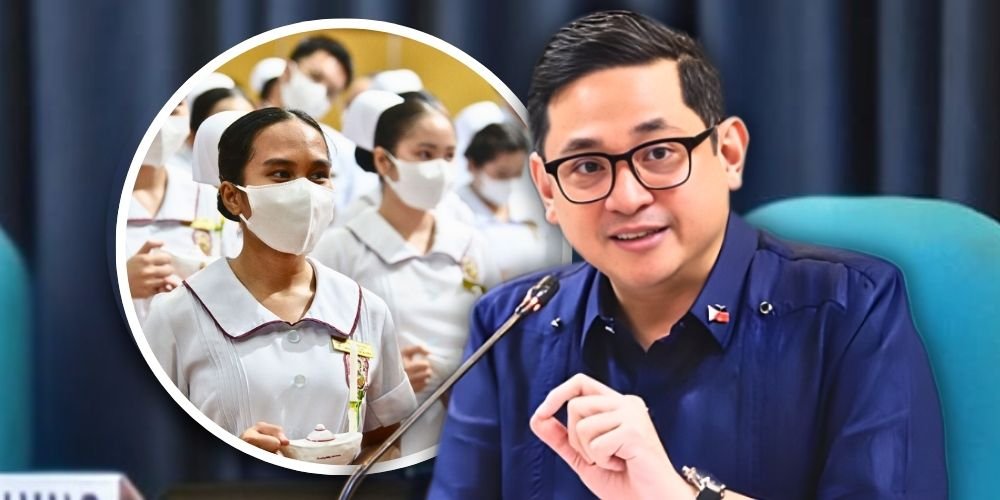
A ₱500 million subsidy for Related Learning Experience (RLE) expenses of nursing and health students has been approved at the bicameral conference committee level of the proposed 2026 national budget, following a proposal pushed by Senator Bam Aquino
The funding was included under the Maintenance and Other Operating Expenses of the Higher Education Development Program and is intended to cover one-time costs incurred by students while completing mandatory clinical training. Aquino said the high cost of RLE has long been a reason many students are forced to delay graduation or drop out entirely.
Aquino said the issue was raised repeatedly by nursing students during the 2025 senatorial campaign, who described paying out of pocket for uniforms, transport, medical supplies, and other requirements needed to complete hospital-based training. “Many nursing students choose to drop out because RLE is expensive. Now, there is subsidy, they are now included,” he said.
RLE serves as required on-the-job training for health-related degree programs and must be completed before graduation. Without financial support, students often shoulder the full cost despite not being paid during clinical rotations.
The subsidy will apply to students enrolled in nursing and other health-related programs, including medical technology, pharmacy, physical therapy, occupational therapy, respiratory therapy, radiologic technology, midwifery, nutrition and dietetics, speech-language pathology, dentistry, biochemistry, psychology, and pre-med courses. The Commission on Higher Education is expected to issue the guidelines for implementation, with priority given to students from low-income families.
Aquino said the measure aims to reduce financial pressure on students, prevent dropouts, and help ensure a steady pipeline of healthcare workers. “This will reduce their study burden and help them achieve their dream of a better life, not only for themselves, but also for their family and loved ones,” he said.
The ₱500 million RLE subsidy forms part of the broader 2026 education budget approved by the bicameral committee, which totals ₱1.38 trillion, the largest allocation for education to date.