
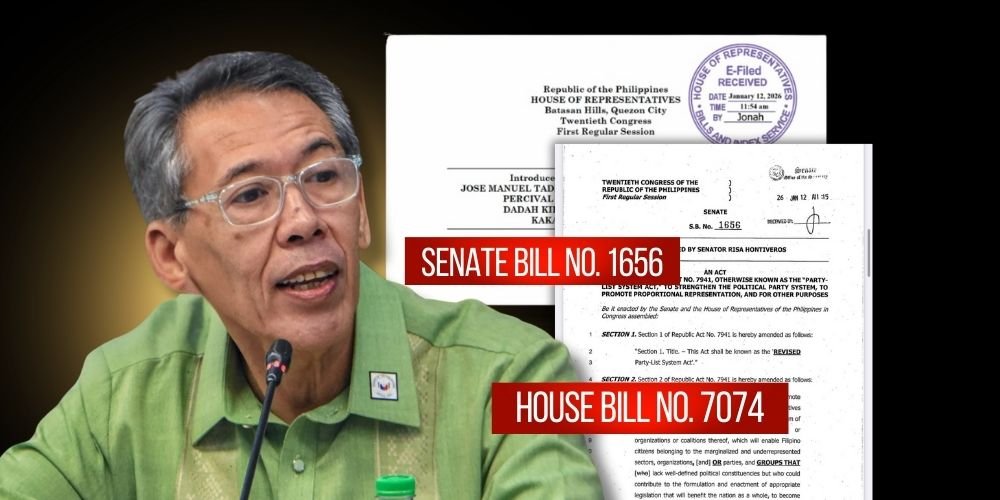
Chel Diokno filed a bill seeking to overhaul the Party-List System, saying reforms are needed to restore its original intent and prevent its capture by political dynasties and vested interests.
Diokno is one of the authors of House Bill 7074, which proposes amendments to Republic Act 7941, also known as the Party-List System Act. The measure is formally titled the Revised Party-List System Act.
House Bill 7074 “seeks to restore the true intent of the law” and “guarantees that marginalized sectors have a real voice in Congress, enabling them to fight for their rights and welfare,” Diokno said in a statement.
He co-authored the bill with fellow Akbayan Partylist Representatives Akbayan Rep. Perci Cendaña and Akbayan Rep. Dadah Kiram Ismula, as well as Dinagat Islands Representative Kaka Bag-ao.
The proposed measure serves as the House counterpart of Senator Risa Hontiveros’ Senate Bill 1656 and includes an explicit anti-political dynasty provision.
Under House Bill 7074, the spouse or kin within the fourth degree of consanguinity or affinity of an incumbent elective official, a party-list group nominee, or a candidate for any elective public office in the same election would be barred from becoming or substituting as a party-list nominee.
The bill also prohibits party-list nominees, representatives, and organizations from entering into contracts with the government to supply goods or services or to perform construction or other works.
It further bars party-list nominees and groups from serving as a partner, director, officer, member, or stockholder of any corporation, partnership, or entity that holds a government contract.
House Bill 7074 mandates the Commission on Elections to deny or cancel the registration of party-list groups with names that are confusingly similar to television or radio program titles, government activities, or public figures’ names. Registered groups whose names fall under the prohibition would be required to adopt and register a compliant name with the Commission on Elections within six months from the law’s effectivity.
The measure also removes the three-seat cap on party-list groups to “enable full democratic and proportional representation,” according to the bill’s explanatory note.