
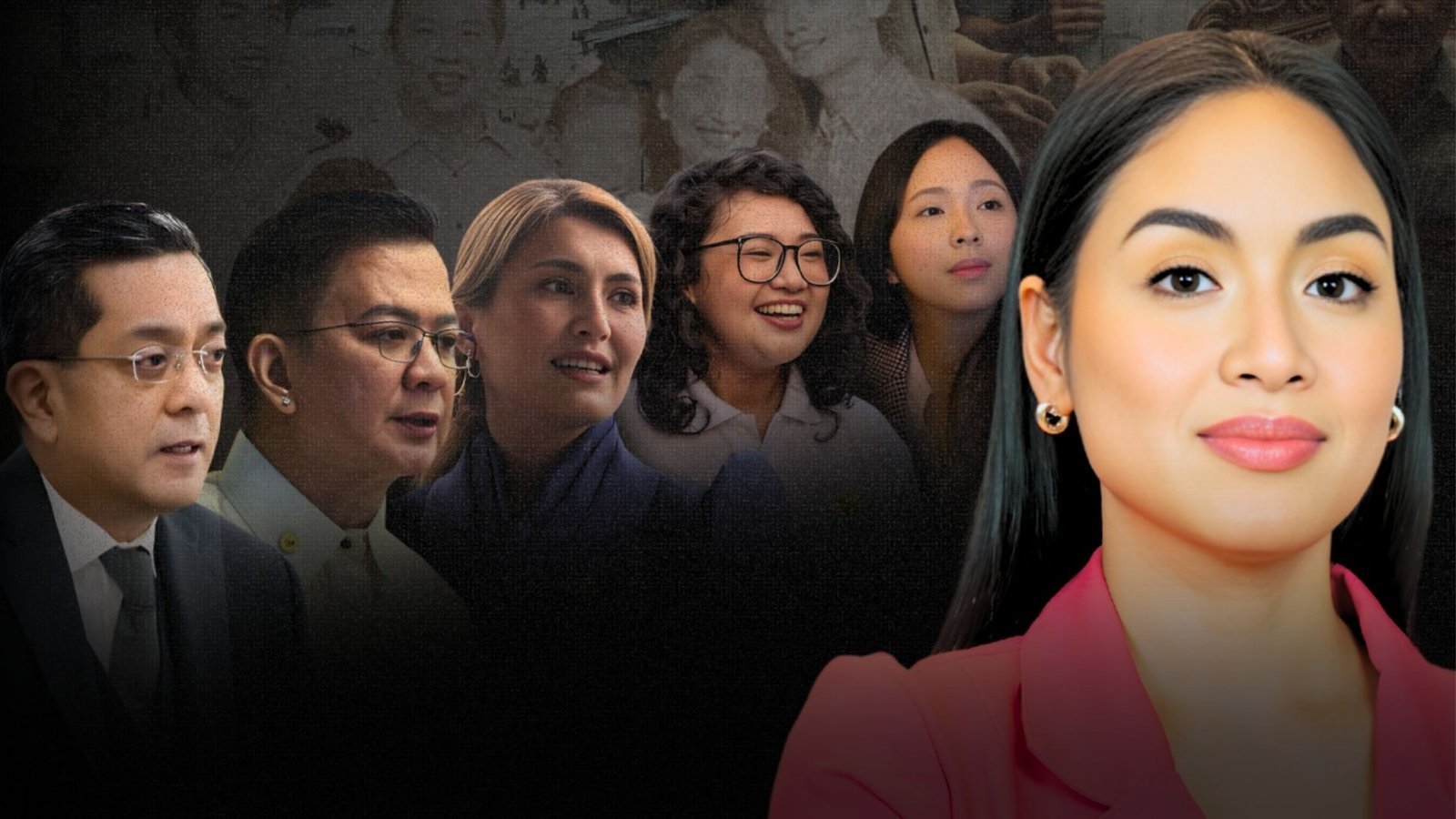
In her new PGMN episode, anchor Cj Hirro presented a detailed outline of what she described as patterns of selective enforcement, overlooked violations, and constitutional issues involving the Commission On Elections (COMELEC).
Hirro opened the episode by saying the public is confronted with conflicting narratives and political noise that make it difficult to obtain clear information. She said this environment allows misinformation, misdirection, and unverified commentary to influence political discussions.
Watch the full episode here:
Hirro stated that COMELEC decisions have contributed to public distrust. She cited the case involving Lawrence Lubiano’s ₱30-million donation to the 2022 Senate campaign of Chiz Escudero. According to Hirro, the controversy expanded after Lubiano mentioned the donation during a congressional hearing. Hirro said the law prohibits donations from corporations with government contracts but allows donations from individuals using personal funds, even if they own companies, unless the donation is made on behalf of the corporation. She cited Supreme Court doctrine that treats corporations and their owners as separate entities.
Hirro questioned why COMELEC focused on the Escudero–Lubiano issue while, according to her, other campaign donors in different 2022 races also benefited from government appointments or public contracts. She cited data from the Department of Public Works and Highways database to compare contracts awarded to several construction companies whose owners were listed as donors in various SOCEs.
Hirro then reviewed Statements of Contributions and Expenditures filed by several political parties and candidates. She pointed to entries posted on the COMELEC website, noting discrepancies or unusually low reported contributions. She referenced past reporting by the Philippine Center for Investigative Journalism regarding Senator Risa Hontiveros’s 2013 SOCE and her declared campaign spending at the time.
Another major issue raised in the episode was the case of Tingog Representative Yedda Romualdez. Hirro noted that Romualdez previously served as Leyte’s 1st district representative in 2016 and later as Tingog’s party-list nominee in 2019, 2022, and 2025. Hirro said this constitutes a fourth consecutive term as a House member, citing Article VI, Section 7 of the Constitution, which sets a three-term limit for members of the House of Representatives.
Hirro disagreed with COMELEC’s position that the nomination was valid because no petition for disqualification was filed. She cited Article IX-C of the Constitution, which she said grants COMELEC regulatory authority to act even without a petition when enforcing election laws. Hirro also referenced Supreme Court rulings in Borja v. COMELEC and Latasa v. COMELEC to argue that continuous exercise of legislative power—not the mode of election—determines consecutive terms.
Hirro then discussed petitions filed by the National Task Force to End Local Communist Armed Conflict seeking the cancellation of registration of Kabataan and Gabriela party-lists. She cited the Party-List System Act and COMELEC rules outlining grounds for cancellation, including advocacy of unlawful means or receipt of foreign support. Hirro referenced testimony from former rebels during Senate hearings held in 2020 and cited documents from the Belgian Ministry of Foreign Affairs and the Anti-Money Laundering Council as part of the petition’s supporting materials. These petitions remain pending with COMELEC.
Hirro also discussed the allocation of party-list seats. She said the Constitution limits party-list representation to 20 percent of the House. She cited Veterans Federation Party v. COMELEC, which characterized the 20 percent limit as an “absolute maximum.” According to Hirro, with 63 party-list seats and 254 district seats, Congress stands at 317 members, or 19.87 percent party-list composition. Hirro said the addition of a 64th party-list seat awarded to Gabriela increased representation to 20.13 percent.
Hirro stated that decisions benefiting both Tingog and certain Makabayan-aligned party-lists illustrate inconsistent application of rules. She said this dynamic explains, in her view, the political alignments visible in Congress and the absence of internal challenges to certain nominees.
Hirro ended the episode by stating that COMELEC’s role as the primary guardian of the electoral process makes the consistent and non-political application of election law essential, and that deviations from constitutional and statutory rules have broad consequences for public trust.