

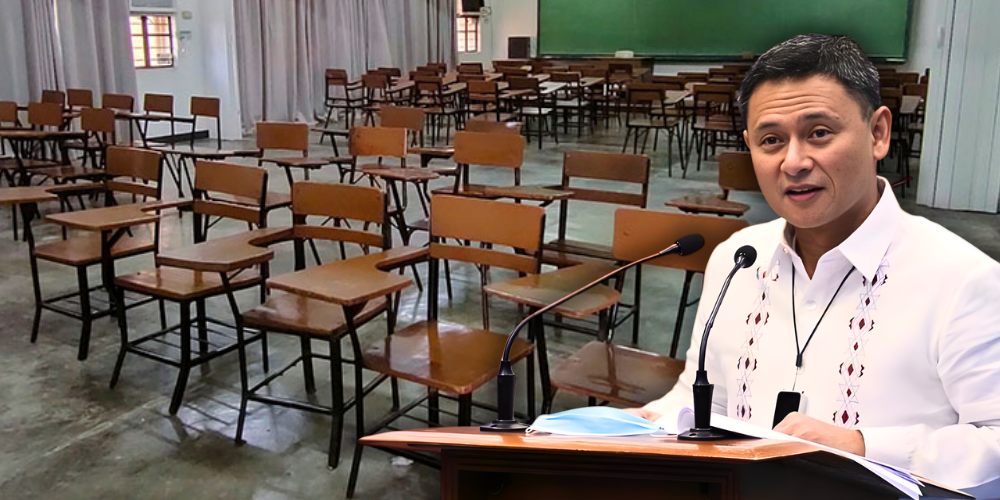
Education Secretary Sonny Angara is pushing an accelerated classroom construction drive as the government confronts a nationwide shortage exceeding 165,000 rooms, a gap that continues to strain public schools and disrupt learning schedules.
Angara is seeking closer collaboration with local government units to fast-track new builds, framing classroom construction as an urgent service delivery issue rather than a long-term aspiration. He said cities and municipalities can help unlock stalled projects and bring classrooms online faster by serving as additional implementers alongside the DepEd under the upcoming national budget.
The plan was discussed with the League of Cities of the Philippines, led by Mayor Francis Zamora, as part of a new framework that allows LGUs to directly participate in building school facilities. Angara said tapping local capacity is critical to immediately reduce overcrowding that forces many schools to operate on double or triple shifts and limits full delivery of the K–12 curriculum.
Government data show the shortage is most acute in Calabarzon, the National Capital Region, and the Bangsamoro Autonomous Region in Muslim Mindanao, with more than half of the deficit concentrated in Luzon. Several other regions also report significant gaps, underscoring the scale of the construction challenge.
To speed delivery, the government has cleared additional infrastructure pathways, including a new phase of the Public-Private Partnership for School Infrastructure Project approved by the Economic Development Council chaired by President Bongbong Marcos. This effort complements nearly 24,000 classrooms already programmed under the next budget and policies that empower LGUs to build school facilities.
Looking ahead, the education department aims to deliver 105,000 classrooms over the medium term through a build-lease-and-transfer scheme, positioning classroom construction as a central pillar of Angara’s push to restore normal class schedules and improve learning conditions nationwide.