
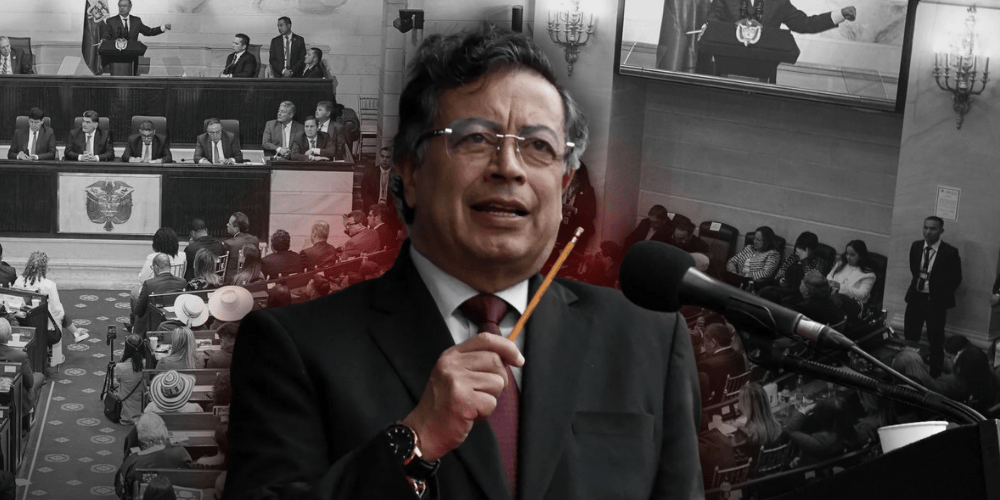
Colombia’s government has moved to reduce the cost of its political institutions as budget pressures intensify. President Gustavo Petro has ordered a 30% cut to the salaries of members of Congress through a presidential decree.
The decision comes as the country prepares for legislative and presidential elections in the first half of the year. It also follows failed attempts by lawmakers themselves to lower their own pay. The measure will take effect after a new Congress is elected.
Before the cut, Colombian legislators earned about $13,000 a month, roughly 32 times the national minimum wage. The decree removes a “special services” bonus that had been added to congressional pay more than a decade ago. That bonus was originally meant to cover relocation costs for lawmakers working in Bogotá. Without it, monthly salaries will fall to about $9,400.
In the decree, the government said lawmakers’ wages had become disproportionate to average incomes and the country’s economic conditions. It added that austerity measures are necessary as long as they do not affect citizens’ fundamental rights. The salary reduction forms part of a broader effort to manage tightening public finances.
Colombia’s government is seeking to raise about $4 billion this year. Officials say the funds are needed to pay health insurance companies, maintain fuel subsidies, and invest roughly $700 million in military infrastructure to counter drone attacks by rebel groups. Public spending under Petro has expanded sharply, reaching levels higher than during the COVID-19 pandemic. The national budget stood at around $134 billion in 2025.
Reactions within Congress have been divided. Senator Angélica Lozano described the cut as a limited but necessary measure. Senate President Lidio García criticized the move, accusing Petro of targeting lawmakers who rejected his reforms, including a tax bill blocked in December.
García also noted that Petro received the same bonus during his own years in Congress. The salary reduction will take effect in July, after legislative elections in March and presidential elections in May.