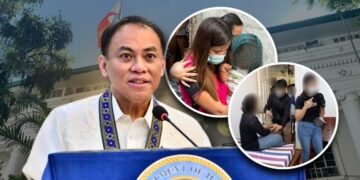


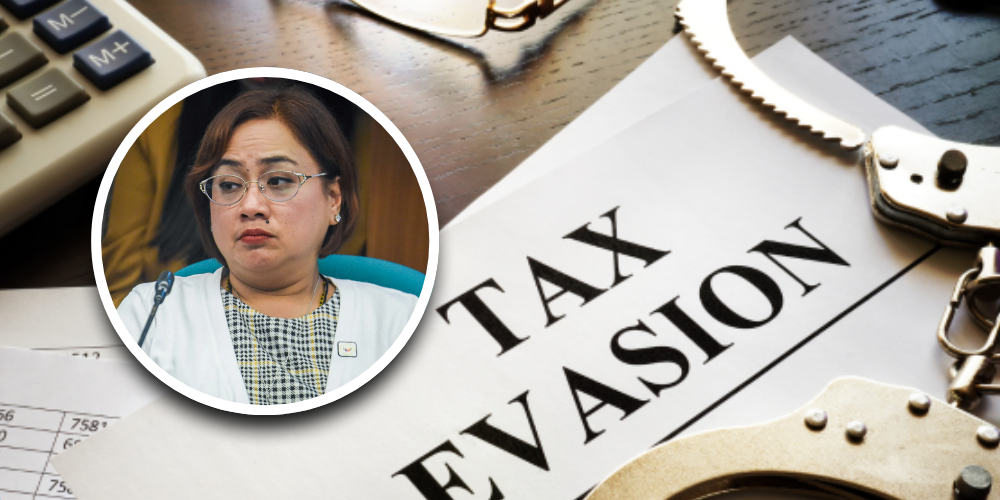
The Department of Justice has officially filed four tax evasion charges against Sarah Discaya, a controversial government contractor, before the Court of Tax Appeals (CTA), marking a key phase in the legal scrutiny of her financial conduct. Justice Department spokesman Raphael Niccolo Martinez said the information was submitted to the CTA on February 3 and covers alleged violations for tax years 2020 and 2021.
Martinez said the charges include two counts of “willful attempt to evade or defeat taxes” under Section 254 of the National Internal Revenue Code and two counts of “willful failure to supply correct and accurate information” under Section 255, both tied to how Discaya prepared her income tax returns for the two years in question.
Martinez explained that the matter involving Discaya’s husband, Curlee, was set aside temporarily after he filed a motion for reconsideration, saying the Bureau of Internal Revenue (BIR) was asked to comment as part of the procedural process. “Because of this filing, the BIR, as a matter of procedure, was asked to comment… and until such time the panel of prosecutors can resolve on the basis of these documents, then the preliminary investigation is continuing,” Martinez said.
Prosecutor General Richard Fadullon told reporters the Department of Justice aims to address outstanding procedural issues within weeks as the case moves forward. “Rest assured that… by the coming week, no, we will have been able to resolve that issue already,” Fadullon said, describing ongoing work to complete reviews and move the proceedings ahead.
The filing of tax evasion cases comes amid a broader set of legal challenges involving Discaya. In December 2025, the Office of the Ombudsman charged Sarah and others over an alleged P96.5-million “ghost flood control” project in Davao Occidental, with related graft and malversation complaints still pending.
Discaya’s legal troubles follow public scrutiny by lawmakers during hearings on anomalous infrastructure projects in September 2025, when she and her husband came under sharp questioning over company practices linked to government contracts.
The move to file the cases with the CTA reflects the DOJ’s assessment that there is prima facie evidence for prosecution under the relevant sections of the tax code. As proceedings unfold, the court will determine whether the charges warrant trial or dismissal, and prosecutors will continue coordinating with the BIR as part of the formal process.