


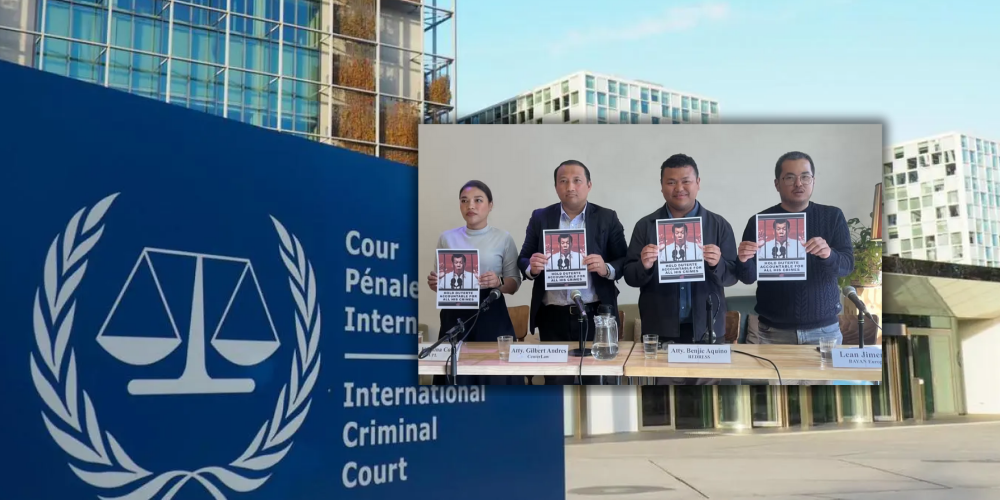
Lawyers for former Philippine president Rody Duterte have argued before the International Criminal Court Appeals Chamber that while the court may technically have jurisdiction over alleged crimes linked to his administration, it lacked the legal authority to exercise that jurisdiction when the investigation into the Philippines was authorized in 2021.
In a filing dated Jan. 23, Duterte’s legal team responded to submissions on jurisdiction under Regulation 28, maintaining that the legal conditions required for the ICC to act were no longer in place at the time the investigation was approved in September 2021. The lawyers pointed to the Philippines’ withdrawal from the Rome Statute, which took effect in March 2019, as central to their argument.
The defense acknowledged that the alleged crimes were said to have occurred when the Philippines was still a State Party to the ICC. However, they argued that Article 12(2) of the Rome Statute requires a state to be a member at the time the court decides to exercise jurisdiction, not merely at the time the alleged acts were committed.
Central to the filing was a distinction between the existence of jurisdiction and its exercise. The lawyers said the ICC may have jurisdiction over certain crimes, persons, and time periods, but could only exercise that jurisdiction if territorial or nationality requirements were met when the investigation was authorized. Those requirements, they argued, ceased to apply after the Philippines’ withdrawal.
Duterte’s lawyers rejected the prosecution’s position that the opening of a preliminary examination before withdrawal preserved the court’s authority. They said jurisdiction is only exercised once a formal investigation is initiated following authorization by the Pre-Trial Chamber, which in this case came more than two years after the Philippines was no longer a State Party.
The defense also challenged legal interpretations advanced by the prosecution and the Office of Public Counsel for Victims, arguing these were inconsistent with the text of the Statute. They disputed comparisons to previous ICC cases, including the Burundi situation and the Abd-Al-Rahman case, saying these involved different legal circumstances.
Addressing Article 127 on withdrawal, the lawyers said it does not override or modify the requirements of Article 12 and does not create an exception allowing the court to exercise jurisdiction after a state’s withdrawal. They urged the Appeals Chamber to apply a strict reading of the Rome Statute, arguing that efforts to address impunity cannot justify departing from its plain terms.