

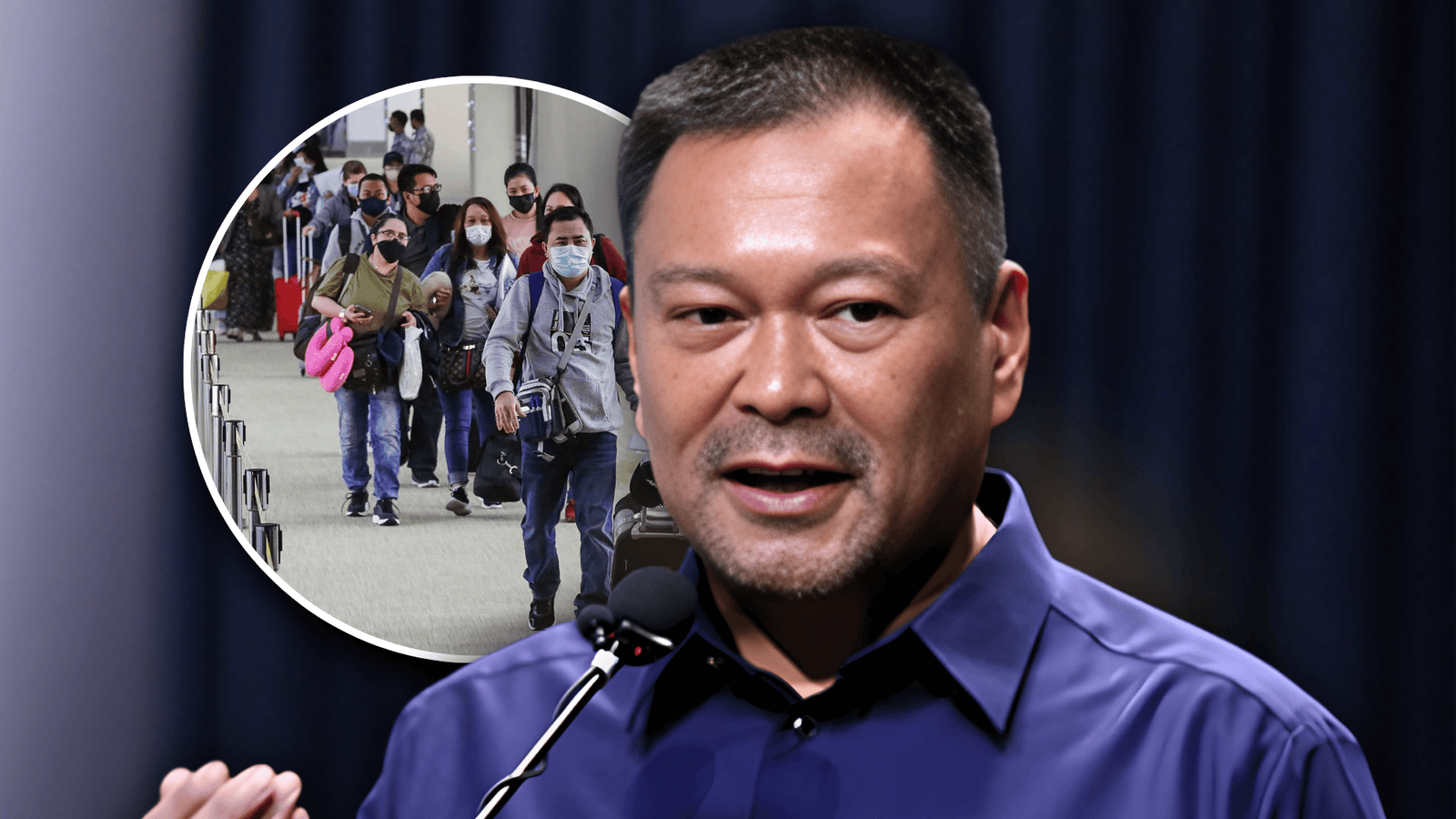
Sen. JV Ejercito is urging the government to ramp up funding for safer accommodations and stronger mental health support for overseas Filipino workers (OFWs), warning that many Filipino workers abroad continue to face isolation, emotional distress, and poor living conditions.
During the Senate’s 2026 budget deliberations, Ejercito said the government must boost its investments in OFW welfare across all global posts. He pressed the Department of Migrant Workers (DMW) to build and improve temporary shelters and widen access to psychosocial services for distressed workers.
“As the Senate continues its budget deliberations,” he said, the state needs “stronger protection for OFWs,” including upgraded shelters and expanded mental health interventions.
Ejercito questioned whether the DMW’s P870-million allocation for refurbishment and construction of shelters is enough, noting the growing demand for support. He vowed to push for additional funding, saying, “Let’s add funding for temporary shelters because we want to ensure that they have a good condition, especially in areas where there are many distressed OFWs.”
He emphasized that mental health must be treated as a core government responsibility. “Mental health is health. We must continue to care for both the body and the mind. I will fight for a bigger budget to make sure every Filipino can get the help they need, when they need it.”
Ejercito also insisted that all government-run shelters must be maintained at “humane and dignified standards.” Drawing from visits abroad, he noted stark differences between existing facilities: “I saw it personally, with my own eyes, there were temporary shelters that are well-maintained and beautiful, like in Singapore and Korea. But let’s level up the others.”
He acknowledged the DMW’s assurance that shelters already provide psychosocial services, with psychiatrists, social workers, and trained personnel on standby. However, he pushed for wider coverage, saying services should reach OFWs outside government shelters as well.
“It’s good to hear that the DMW is serious in responding to the mental health issues of our OFWs. There is really a big concern for mental health nowadays, especially in the age of social media. Our OFWs are vulnerable, they are oftentimes alone and feel sad,” he said.
He added: “I appeal to the DMW, even the OFWs that are not within the temporary shelters, they may also be provided with access to mental health interventions.”
Ejercito stressed that OFWs, who “fueled the economy and supported millions of Filipino families,” deserve full state protection—safe accommodations, timely support services, and mental health care that reflect the sacrifices they make abroad.