

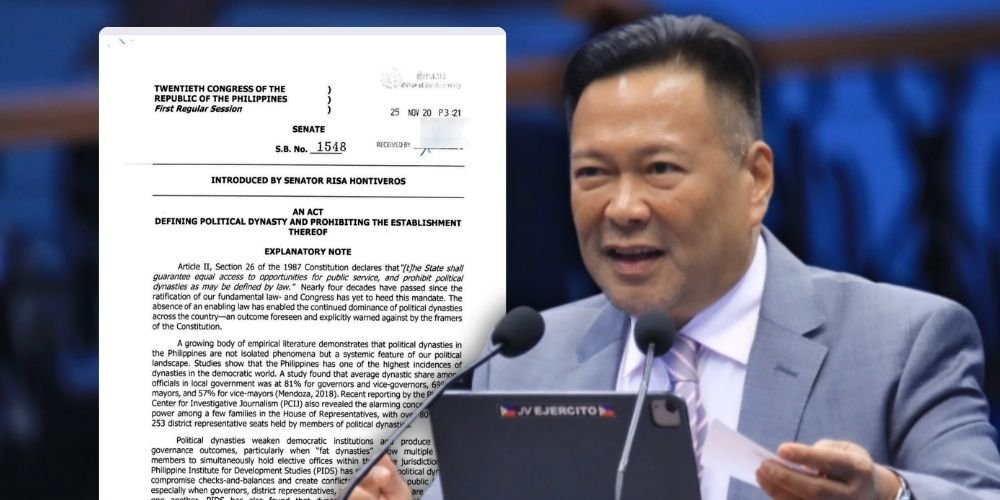
Senator JV Ejercito said the proposed anti-political dynasty bill could widen the opportunity for Filipinos to serve in government, as lawmakers move to finally enforce the Constitution’s ban on political dynasties.
He made the statement as discussions continue in Congress on legislation that would define and prohibit political dynasties, a constitutional provision that has remained without an implementing law for decades.
Ejercito pointed to structural barriers that prevent many qualified Filipinos from running for office. He said the country has “112 million” people but only a limited number have the name recall, machinery, and financial resources needed to win elections.
He argued that entrenched political families dominate access to public office and that reform would allow others to compete on more equal footing.
“Some say we should focus on ‘bigger’ problems like poverty, hunger, or the economy before tackling dynasties. But these problems are limbs of the same body,” Ejercito said. He framed political reform as directly linked to broader national issues, arguing that concentration of power affects governance outcomes.
Ejercito acknowledged that the measure faces resistance because many lawmakers themselves come from political families. He noted that roughly half of House members and several senators belong to dynasties. He also admitted that he has benefited from family name recognition in politics but said reform should not be blocked because of that reality.
The anti-political dynasty bill remains under review in both chambers. Lawmakers continue to debate how to define the scope of the prohibition and whether Congress is prepared to pass a measure that would directly affect its own members.