


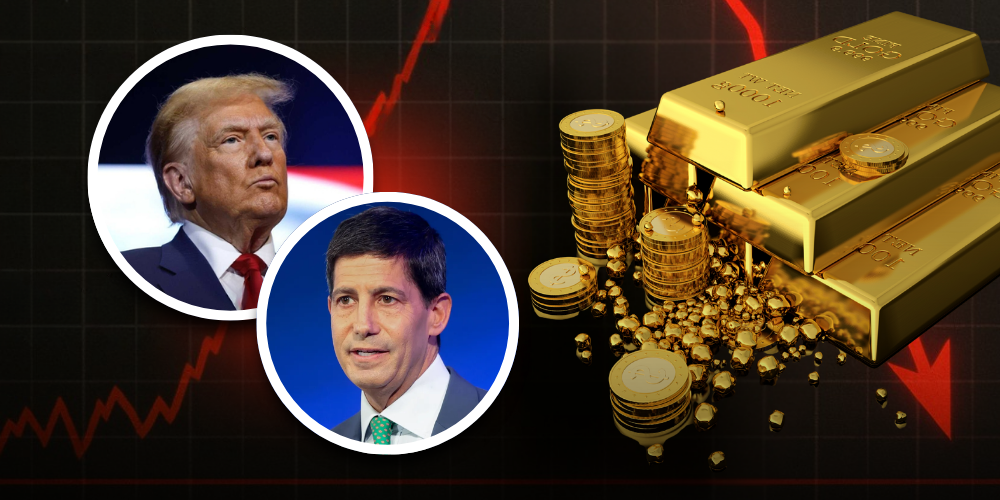
A historic reversal hit global metals markets after gold suffered its largest single-day drop on record, wiping out an estimated $6.3 trillion in market value within 24 hours.
The selloff followed a sharp surge in the US dollar after President Donald J. Trump confirmed plans to nominate Kevin Warsh as the next chair of the Federal Reserve.
Gold prices fell more than 12% intraday, briefly dropping below $5,000 per ounce, marking the steepest one-day decline since the early 1980s. Silver plunged as much as 36%, its worst intraday fall on record, while copper, platinum, and palladium also declined as losses spread across metals markets.
Traders reacted swiftly to the Warsh nomination, which strengthened expectations of tighter US monetary policy. Warsh is widely regarded as one of the most hawkish inflation fighters among potential Fed leaders, boosting the dollar and reducing the appeal of dollar-denominated assets such as gold and silver.
The move came after months of heavy inflows into precious metals driven by concerns over currency debasement, Federal Reserve independence, trade tensions, and geopolitical risk. That positioning left markets vulnerable to abrupt reversals once sentiment shifted.
Options activity and technical factors amplified the decline. Large call-option positions, dealer hedging, and month-end portfolio rebalancing accelerated selling as prices fell through key levels. Analysts noted that gold’s relative-strength index had reached its highest level in decades prior to the drop.
Even after the selloff, gold remained up about 13% for the month, while silver posted gains near 19%, highlighting how elevated prices were before the sudden correction.