
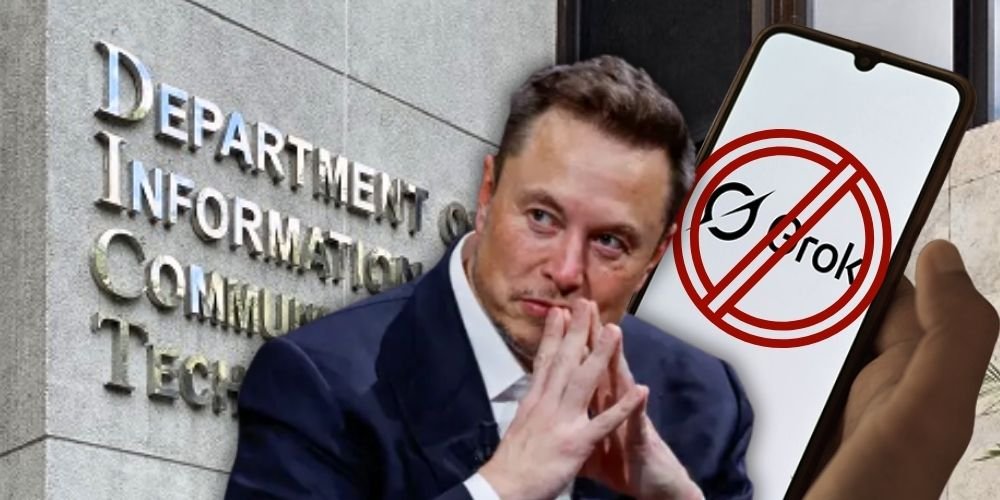
The Grok ban drew a line on access, but not on how deepfakes emerge. The Department of Information and Communications Technology ordered internet service providers to block Grok nationwide after reports linked the chatbot to non-consensual deepfake images.
DICT Secretary Henry Aguda cited the Cybercrime Prevention Act and the Anti-Child Pornography Act as legal bases. Officials said the move aimed to prevent potential public harm, particularly risks affecting women and minors, and was carried out through coordination with the National Telecommunications Commission and the Cybercrime Investigation and Coordinating Center.
The department also acknowledged that Grok’s footprint in the Philippines remains limited compared with other AI platforms that continue to operate locally. Like similar systems, Grok generates images through text prompts entered by users and governed by platform safeguards. Reports connected the disputed outputs to how the system was prompted rather than to autonomous generation.
International responses show differing regulatory approaches. Malaysia and Indonesia imposed blocks similar to the Philippine move. In contrast, the European Union, the United Kingdom, France, Germany, and Australia launched investigations, issued warnings, or explored safeguards without full bans, reflecting shared concern over deepfakes but varied enforcement strategies.
xAI said it restricted image editing features and limited access to certain functions, while Elon Musk stated the system refuses illegal requests and addresses vulnerabilities when identified. DICT said the block may be lifted if Grok complies with Philippine internet policies.