
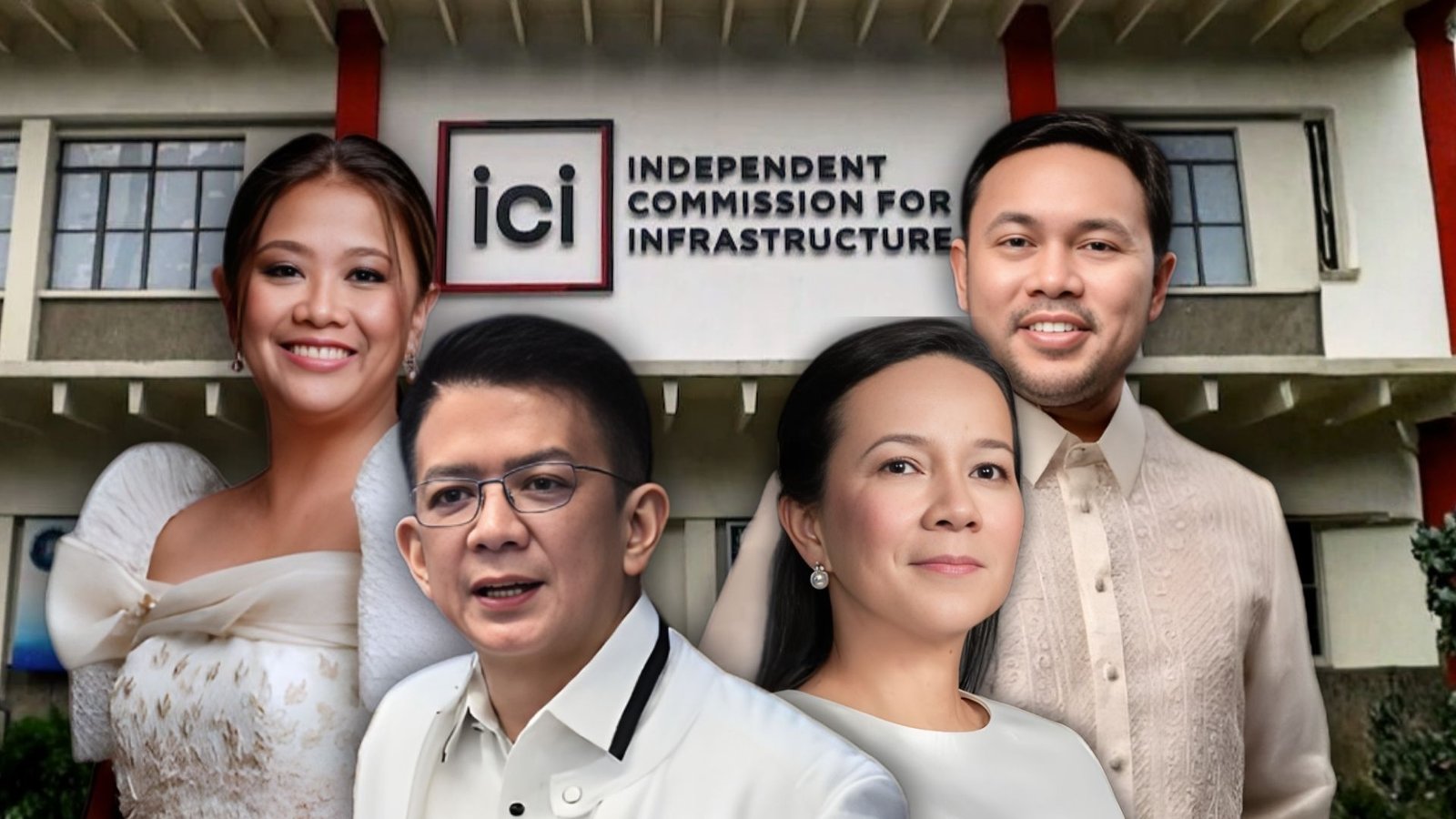
The Independent Commission for Infrastructure did not recommend any criminal complaint against former Senate President Chiz Escudero, former senators Grace Poe and Nancy Binay, and Senator Mark Villar after determining that the evidence presented during its inquiry into flood control projects was not strong enough at this stage to support prosecution. The cases of the four lawmakers were instead forwarded for further investigative review.
The commission concluded its hearings by separating officials it said should face charges from those whose cases required additional fact-finding. Former senator Ramon Bong Revilla, Jr. and several public works officials were endorsed for criminal complaints over alleged ghost or overpriced flood control projects.
Escudero, Poe, Villar, and Binay were placed in the group that the commission said must undergo “more extensive investigation and potential case development,” with no offense recommended against them.
The commission’s referral indicates that the available evidence is not strong enough to support charges against the four lawmakers at this stage, a posture that makes any future prosecution difficult unless new corroborating testimony or documentation emerges.
Villar earlier appeared before the commission as part of its inquiry into alleged kickbacks tied to infrastructure allocations. He has rejected the accusations, saying they are baseless and unsupported by evidence. Testimony submitted to the commission by a former public works official also mentioned several lawmakers, including Villar and Binay, in relation to supposed shares from flood control projects. The commission noted that these statements required corroboration and were not, on their own, a basis to recommend charges.
Binay was likewise named in sworn testimony but was included only in the group referred for further review. Poe has described the referral as consistent with her position that allegations involving her are not backed by evidence. Their responses highlight that the commission’s action does not reflect any finding that they engaged in wrongdoing.
Commission officials said their role was to gather testimony and documents and transmit these to the office responsible for determining criminal, civil, or administrative liability. They stressed that investigators must independently evaluate whether any acts described amount to actionable misconduct.
Escudero, who lost the Senate presidency in September while facing questions tied to the controversy, is now subject to the same extended review. In one affidavit, former DPWH official Roberto Bernardo linked Senator Escudero through an intermediary who allegedly got “20 percent of 800 million,” but Bernardo admitted he never dealt with Escudero directly.
The commission treated this account as uncorroborated, noting that such claims require independent verification before they can be considered evidence. The ICI said the statements provided were not enough to support charges against Escudero, Poe, Villar, or Binay without further documentation or testimony.
By recommending prosecution only for Revilla and certain public works personnel while forwarding the four senators’ cases for continued fact-finding, the commission left the allegations unresolved and unproven pending further investigation.