


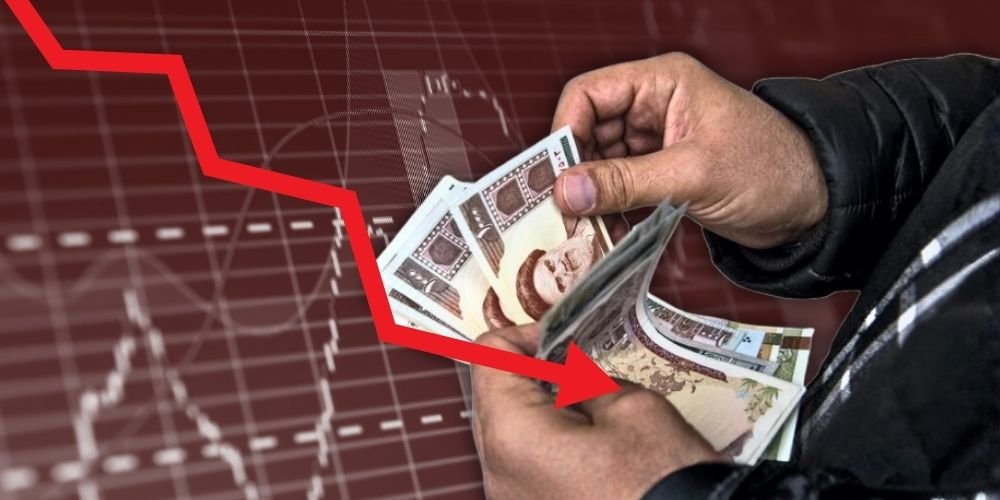
Iran’s currency has entered a critical phase as the rial slides to historic lows across global markets. Open-market trading places the rial near 1.47 million per US dollar, while reports from Europe describe it as effectively unusable against the euro.
Inflation remains elevated, protests have intensified nationwide, and confidence in the currency continues to deteriorate. Together, these developments signal a deepening economic crisis with social and political consequences.
The phrase “near zero” does not mean the rial has disappeared. Economists use it to describe a currency that has lost practical value, purchasing power, and acceptability outside its home market. In Iran’s case, rapid depreciation has made the rial unreliable as a store of value, forcing households to rethink how they protect income and savings.
Inflation sits at the center of the collapse. Consumer prices rose 42.5% in December 2025, eroding wages and pensions. As a result, many Iranians convert cash into dollars, gold, or essential goods immediately after being paid. This behavior accelerates depreciation and reinforces expectations of further weakness.
Sanctions have compounded these pressures by restricting access to hard currency, particularly from oil exports. At the same time, Iran’s economy contracted in 2025 and faces further decline in 2026, limiting government revenue. Policy changes that required importers to purchase foreign currency at open-market rates increased dollar demand overnight, adding fresh strain on the rial.
Confidence has also suffered due to Iran’s multiple exchange-rate systems. Official and subsidized rates sit far below street prices, creating large gaps that encourage speculation and arbitrage. These distortions signal scarcity rather than stability, pushing markets to anticipate continued devaluation.
Iran’s parliament has approved a plan to remove four zeros from the rial over a multi-year transition. Analysts describe the move as an accounting reset that simplifies transactions but does not address inflation or sanctions. Without improvement in underlying conditions, the currency’s collapse may persist, leaving economic pressure and public unrest tightly linked in the months ahead.