


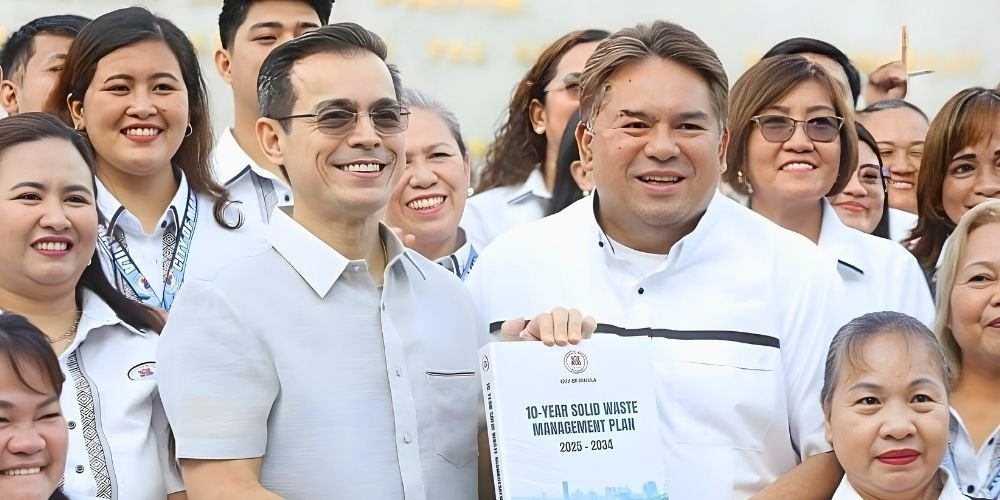
Manila Mayor Isko Moreno Domagoso has launched the city’s updated 10-year Solid Waste Management Plan, outlining a long-term strategy focused on reducing garbage volume and strengthening segregation at source as the capital faces increasing waste output and higher disposal costs.
The plan was presented during a flag-raising ceremony at Manila City Hall on February 16, where Moreno said maintaining cleanliness remains a fundamental responsibility of the local government, regardless of where the trash originates. He stressed that residents ultimately judge the city by how well it manages visible waste in communities.
Moreno also acknowledged the Department of Environment and Public Services and its field units, including the Estero Rangers and Manila Bay cleaning teams, who are tasked daily with clearing debris from waterways and coastal areas.
DEPS Director Kenneth Amurao said the updated plan centers on concrete measures to reduce overall waste generation and cut the volume sent to landfills. He explained that the main goal is to enforce segregation at the source, requiring households and offices to separate biodegradable and nonbiodegradable waste before collection.
“Yung ating updated or new 10-year solid waste management plan is naka-focus ngayon sa plans and programs natin for solid waste. Ang main goal natin is waste reduction through segregation from source, sa mga bahay o opisina pa lang natin, mga nabubulok at di nabubulok,” Amurao said.
Amurao noted that per capita waste generation has nearly doubled, rising from 0.6 kilogram to almost 1 kilogram per person per day, adding pressure on disposal facilities. He said the city is expanding composting operations in its materials recovery facilities and strengthening partnerships with private companies to collect recyclables instead of sending all garbage directly to landfills.
The updated strategy allows for review every two years to adapt to emerging technologies and policy changes, including the possible adoption of waste-to-energy systems.
The rollout comes months after the permanent closure of the Navotas Sanitary Landfill in August 2025 forced Manila to divert its waste to the New San Mateo Sanitary Landfill in Rizal. The longer hauling distance has increased operational costs and turnaround times, with multiple local government units queuing at the disposal site, potentially affecting collection schedules.