

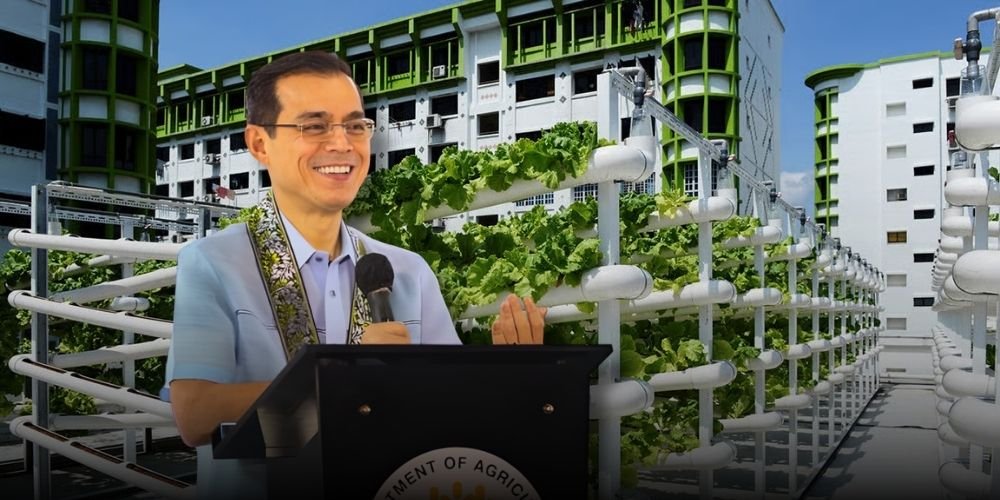
Manila Mayor Isko Moreno Domagoso said the city government is working with the Bureau of Plant Industry to explore the adoption of Singapore’s urban farming technologies, as the capital looks for ways to produce food within limited urban space.
Moreno announced the plan on Feb. 11 during the 96th anniversary of the Bureau of Plant Industry. He said Singapore was chosen as a reference point because it has developed food production systems despite having very limited land. He said Manila faces similar challenges as its population grows while available agricultural areas continue to shrink.
Earlier this year, city officials visited several institutions in Singapore, including the National University of Singapore, Republic Polytechnic, and the Horticulture Technology Hub at ITE College East. The visits focused on fully automated indoor farming, data analytics, and other resource-efficient growing systems that allow food to be produced in controlled environments with minimal space.
Moreno said food production in cities must now be treated as a necessity rather than an option. He warned that food insecurity poses a serious risk as urban populations expand and traditional farming areas become more limited. He said localizing food production can help cities better respond to supply disruptions and rising demand.
Under the plan, the Bureau of Plant Industry will provide technical support through its scientists and specialists, working with the city government to develop practical, science-based approaches suited for dense urban settings. The effort will also involve coordination with national agencies, local governments, and private sector partners to build a framework that can be expanded over time.
Moreno said the initiative builds on Manila’s experience during the COVID-19 pandemic, when the city served as a major food distribution hub despite movement restrictions in other areas. He said the current push toward urban farming is intended to strengthen long-term food security and create systems that future city administrations can continue to develop.