


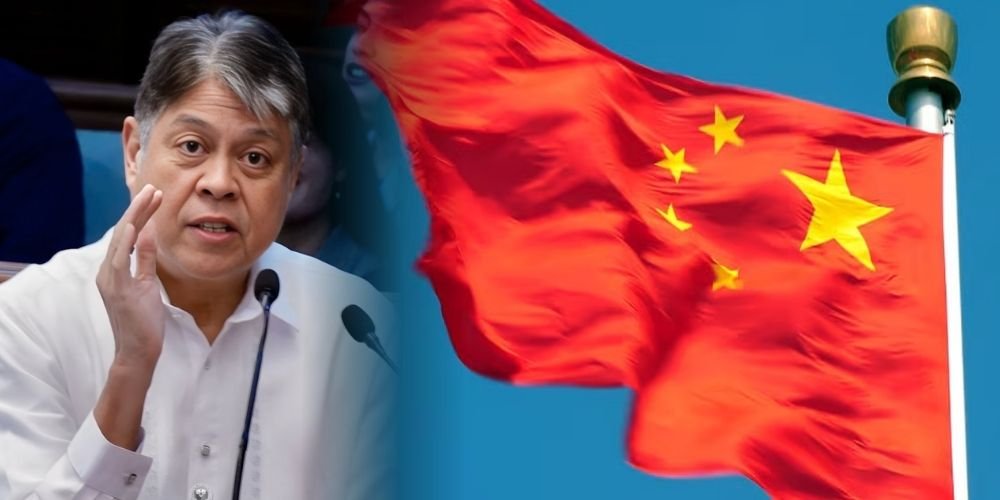
Senator Kiko Pangilinan took a firm stance against the Chinese Embassy in Manila after it criticized the Philippine Senate’s passage of Senate Resolution No. 256, calling the embassy’s response a breach of diplomatic norms and international law.
Pangilinan, who authored and sponsored the resolution, described the embassy’s remarks as “undiplomatic and boorish” and said they violated the Vienna Convention on Diplomatic Relations. He argued that the tone and substance of the statement directed at Philippine lawmakers crossed established standards governing conduct between states.
“The Chinese Embassy’s undiplomatic and boorish response to the official act of the Philippine Senate, in violation of the Vienna Convention on Diplomatic Relations, only proves that China is indeed a bully, has no respect for international law and their acts deserving of condemnation,” Pangilinan said.
The resolution, approved by 15 senators, condemned earlier statements from a Chinese embassy official that lawmakers said departed from the restraint and courtesy expected in diplomatic communications. It also asserted that the remarks ran counter to principles of mutual respect and non-interference among states.
Pangilinan maintained that the Senate would not yield to foreign pressure. “We rest our case. We will never tolerate nor be cowed by foreigners disrespecting us in our own land,” he said.
He also renewed his call for the Department of Foreign Affairs, to take appropriate diplomatic measures to uphold the country’s dignity and ensure that relations with other states are conducted in accordance with international law.
The Chinese embassy had earlier dismissed the Senate resolution as a political move and accused lawmakers of undermining efforts to improve bilateral relations. Pangilinan rejected that characterization, framing the dispute as a matter of sovereignty and adherence to global diplomatic standards rather than partisan politics.
With his remarks, Pangilinan positioned himself squarely at the forefront of the Senate’s pushback, casting the issue as a test of how firmly the Philippines defends its institutions and maritime rights in the face of foreign criticism.