


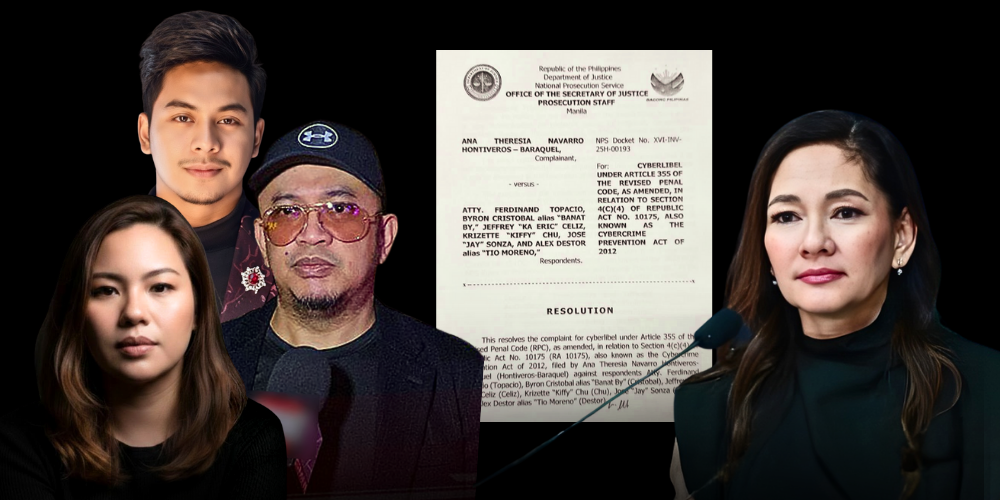
The Department of Justice has dismissed the cyberlibel complaint filed by Senator Risa Hontiveros against lawyer Ferdinand Topacio and six other respondents, ruling that prosecutors found no sufficient basis to pursue criminal charges.
The complaint, filed under the Cybercrime Prevention Act of 2012, named Topacio along with Byron Cristobal, also known as “Banat By”; Jeffrey Celiz, also known as “Ka Eric”; Krizette Chu, also known as “Kiffy Chu”; Jose Sonza, also known as “Jay“; and Alex Destor, also known as “Tio Moreno.”
Hontiveros accused the respondents of making defamatory online statements, videos, and social media posts questioning her conduct during Senate hearings involving witness testimonies. She argued that the remarks violated the country’s cyberlibel law and warranted criminal prosecution.
In its resolution, the DOJ said the complaint failed to meet the threshold required to move forward. Prosecutors found no proof that Topacio or the other respondents acted with actual malice, noting that the statements were not shown to have been made with knowledge that they were false or with reckless disregard for the truth.
The resolution stated that the remarks were made in connection with public controversies and Senate inquiries that had already been discussed in official proceedings and covered in previously published reports. Prosecutors ruled that the statements amounted to commentary on matters of public interest involving a sitting senator and her official duties.
While acknowledging that the statements may have been offensive or sharply critical, the DOJ emphasized that criticism of public officials does not automatically constitute a criminal offense. The panel stressed that public officials are expected to tolerate a higher level of scrutiny and warned that criminalizing such commentary could have a chilling effect on public discourse.
The DOJ concluded that there was no reasonable certainty of conviction and formally dismissed the cyberlibel complaint against Topacio and all co-respondents named in the case. The dismissal applies at the prosecution level and prevents the complaint from proceeding to trial unless reversed through available legal remedies.
Following the ruling, Topacio posted images of the DOJ resolution on social media, describing the outcome as confirmation that prosecutors found no legal basis to sustain the cyberlibel case. He pointed to the finding that the essential elements required for criminal liability were not established.
The dismissal marks a legal victory for Topacio and his co-respondents, as the DOJ upheld prosecutorial standards requiring proof of malicious intent and knowingly false statements before criminal cyberlibel charges may be filed.