

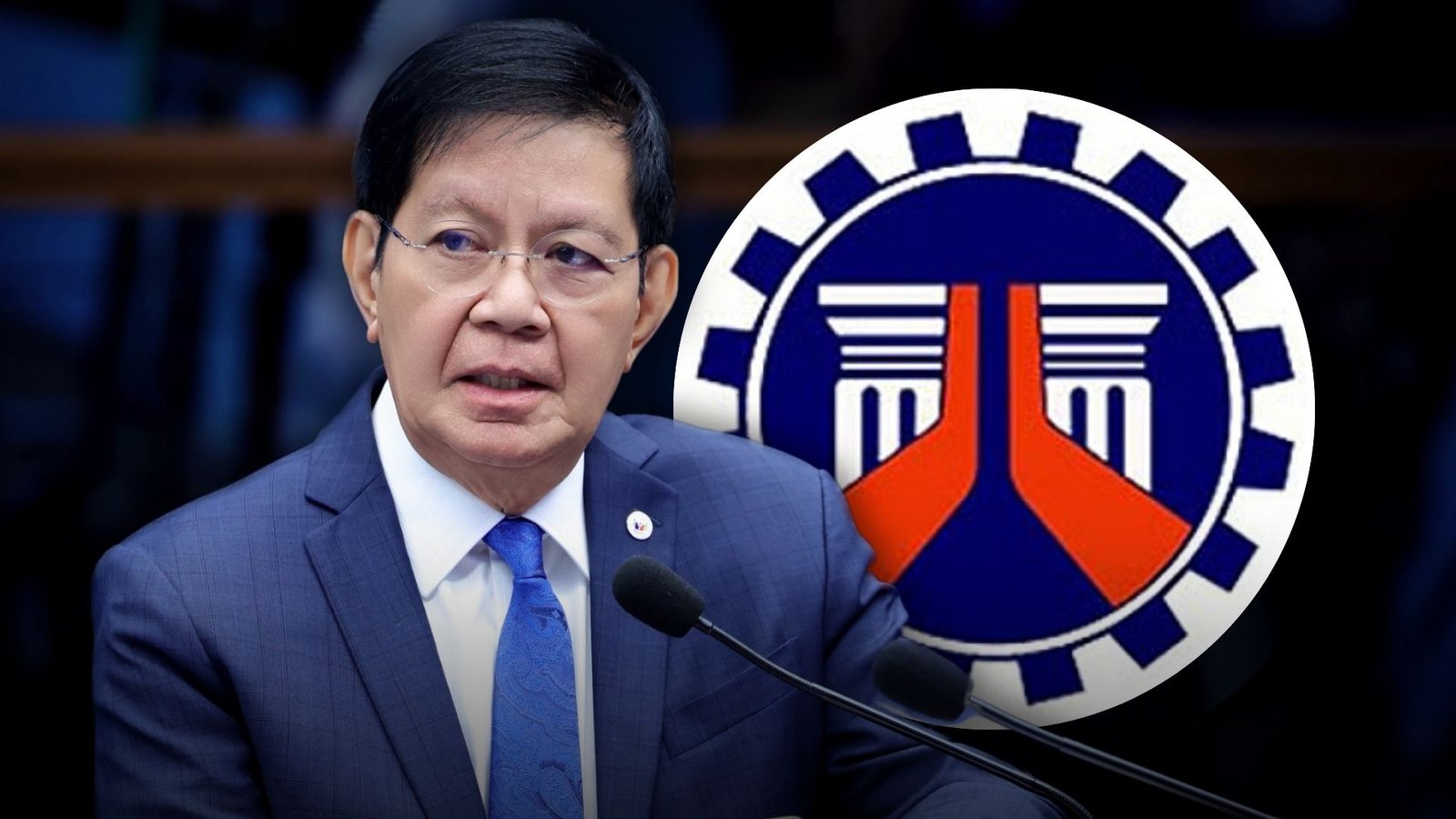
Senate President Pro Tempore Ping Lacson has raised concerns over the slow progress of classroom construction under the Department of Public Works and Highways (DPWH).
In a Senate interpellation, Lacson criticized the DPWH for only completing 60 classrooms by the end of 2025, far behind the 1,700-classroom target for the year. He emphasized the urgency of addressing the backlog in educational facilities, which has been a long-standing issue in the country.
Lacson’s remarks come in the context of Senate Bill No. 1482, or the Classroom-Building Acceleration Program (CAP) Act, which is being pushed by Senator Bam Aquino.
The bill aims to address the country’s classroom shortage by allowing local government units (LGUs) and non-government organizations (NGOs) to participate in classroom construction, bypassing the DPWH’s current role. Aquino’s proposal comes after the DPWH failed to meet its targets for classroom construction, allocating P54.88 billion for the period from 2022 to 2025, but using only a portion of that for classroom building, with billions of pesos still unspent.
One of the key elements of the CAP Act is the involvement of NGOs in classroom construction, something Lacson has questioned due to potential conflicts of interest. He expressed concerns that if NGOs were to take part in bidding and monitoring the construction process, it could lead to issues similar to the past pork barrel scam. “If we involve NGOs and they will actively participate in bidding, monitoring, etc., there is the conflict of interest,” Lacson said, referring to the risks associated with potential fraud in government projects.
The CAP Act, which would decentralize classroom building responsibilities, proposes that NGOs work alongside LGUs to construct classrooms more efficiently. Aquino has argued that NGOs can complete classrooms at a significantly lower cost than the DPWH, which has faced delays and budget overruns in its construction efforts. Aquino’s bill is set to close the gap of 165,000 classrooms over a six-year period, with an estimated P90 billion allocated annually for classroom construction.
While Lacson supports the bill’s intention to address the classroom shortage, he insists that safeguards must be in place to prevent misuse of funds and ensure the integrity of the project. He specifically referenced Republic Act No. 12009, the Government Procurement Act, which restricts NGO involvement in government procurement processes to ensure transparency and prevent fraudulent activity.
Aquino has defended the bill, asserting that the involvement of NGOs and LGUs could streamline the construction process and improve cost-effectiveness. He also highlighted that only P36 billion of the P54.88 billion allocation has been spent on building 7,172 classrooms, leaving significant funds underutilized. The CAP Act aims to address these inefficiencies and ensure that the funds are put to better use, closing the gap between classroom availability and student demand.
Despite the ongoing debate, both Lacson and Aquino agree that the current rate of classroom construction is inadequate. With only 60 classrooms projected for completion in 2025, Aquino called this figure “completely unacceptable” and stressed that the country’s educational infrastructure needs urgent attention.
The CAP Act still faces hurdles before it can be passed, but its potential to transform the classroom construction process and reduce the national backlog has sparked significant discussion among lawmakers. As the country continues to grapple with its educational infrastructure challenges, the hope is that the bill will bring much-needed reforms to address the gaps in classroom availability.