

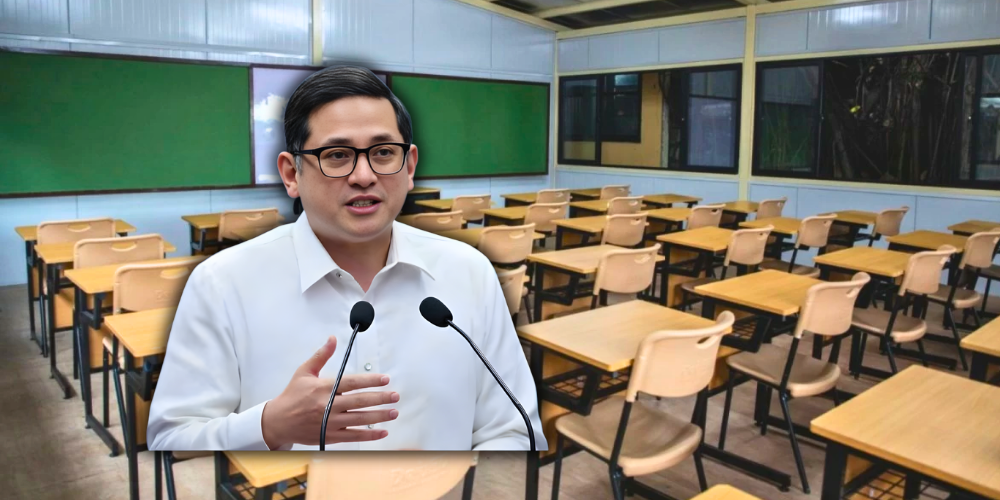
The government is moving to start 25,000 classrooms in 2026 by shifting most construction responsibilities to local government units, a strategy aimed at speeding up delivery and reducing costs as the country confronts a severe classroom shortage.
Senator Bam Aquino said the plan focuses on having 25,000 classrooms started within the year, with LGUs expected to implement the majority of projects through partnerships designed to move faster than traditional national government builds. He said the initiative is anchored on clear timelines to address a classroom backlog estimated at 166,000 nationwide.
“Ang goal po sana namin ay 25,000 classrooms started in 2026,” Aquino said, noting that single or double story classrooms can be completed within 90 to 120 days.
Aquino, chair of the Senate Committee on Education, Culture and Arts, said the Department of Public Works and Highways has limited capacity to deliver classroom projects at scale. “Ang alam ko kasi, ang capacity din ng DPWH is only maybe 2,000 to 3,000 classrooms,” he said.
He said classrooms built by LGUs cost around PHP1.5 million to PHP1.8 million per unit, compared with about PHP3.5 million for some earlier projects. “Hindi lang mabagal, overpriced pa,” Aquino said, adding that the objective is to deliver classrooms “sa tamang panahon, sa tamang presyo.”
More than 200 mayors attended a recent dialogue on accelerating classroom construction, while over 800 LGUs have expressed interest in taking on projects. Aquino said local governments may pursue several options, including building new classrooms, repairing dilapidated facilities, or leasing and purchasing existing buildings to expand capacity quickly.
He added that the Senate committee will maintain close oversight to ensure the PHP66 billion classroom budget is properly used as the LGU led construction drive rolls out nationwide.