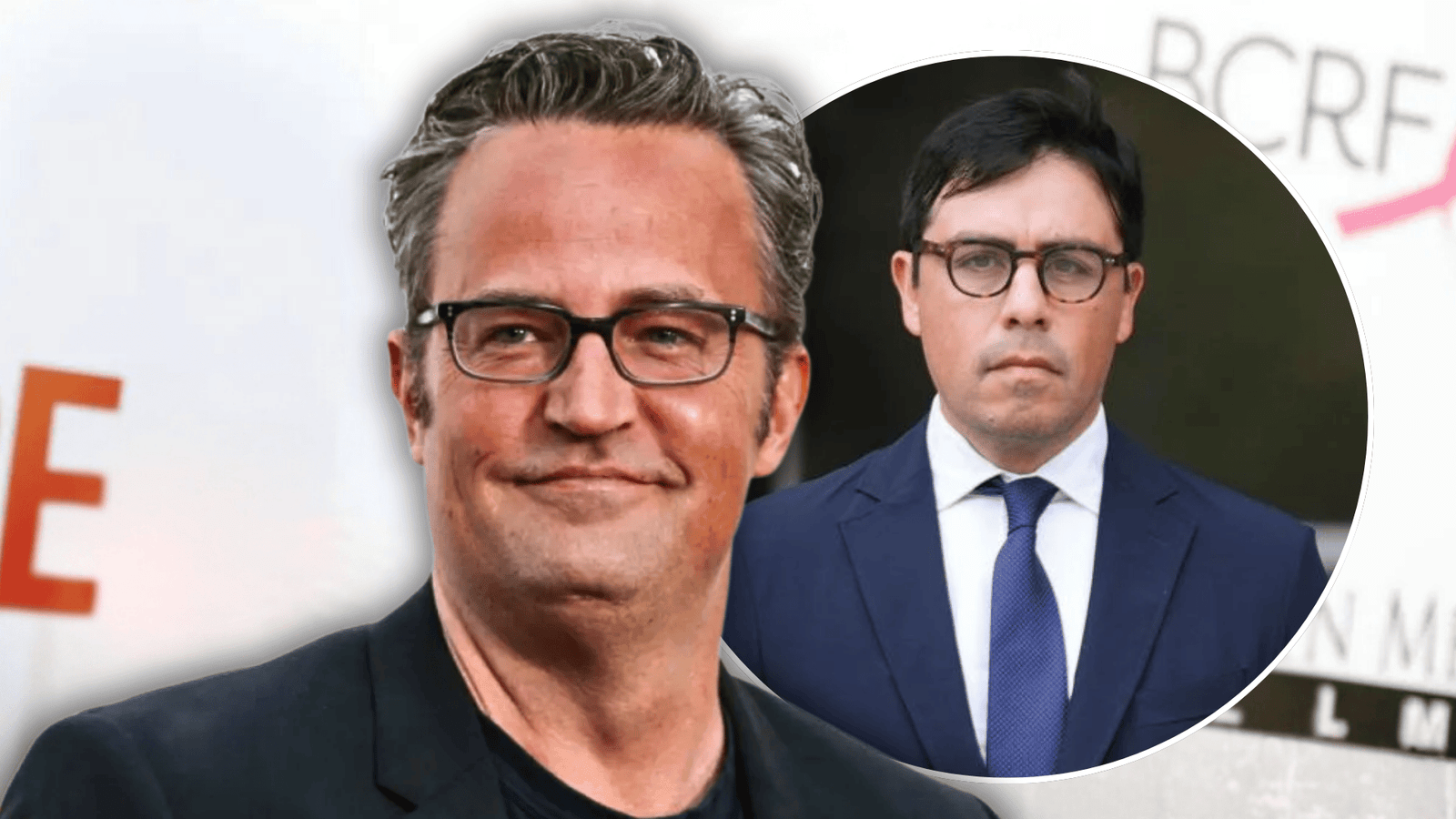
Matthew Perry fought a long battle with addiction, and the people around him didn’t always choose to help him heal. His case returned to public attention this week as Dr. Salvador Plasencia, the Los Angeles physician who sold him ketamine in the weeks before his death, received a 2½-year prison sentence.
The judge stressed that Plasencia did not provide the exact dose that killed Perry, yet she made clear that his actions fed an addiction Perry had worked for decades to manage. The courtroom shifted between anger and grief as Perry’s mother and sisters described how his death reshaped their lives, while Plasencia broke down when he apologized directly to the family.
The hearing exposed a web of exploitation around the actor’s final months, revealing how several people profited from his dependence on ketamine.
Federal prosecutors said Perry had turned to Plasencia after his regular doctor refused to increase his dosage. Text messages showed the physician mocking Perry and viewing him as a source of fast money rather than a patient in need of care. Investigators detailed how Plasencia injected Perry multiple times, including at his home and even in the back seat of a parked car.
The case also involves four other defendants who admitted to supplying or facilitating access to ketamine. They will be sentenced in the coming months, including a dealer known as the “Ketamine Queen,” whose products were tied to the dose that ultimately killed the actor.
Judge Sherilyn Peace Garnett acknowledged Perry’s long struggle and criticized Plasencia for crossing every boundary expected of a doctor. Prosecutors argued that the physician acted as a drug source, not a medical provider, while the defense claimed he made disastrous choices fueled by money.
Perry’s family described the depth of their loss, reminding the courtroom that behind the fame was a person who battled addiction and tried to rebuild his life.
Perry’s death reignited conversations around predatory medical practices, the misuse of ketamine treatments, and the vulnerability of people seeking help for addiction. His case continues to raise urgent questions about accountability and medical ethics, especially as the remaining defendants prepare for their own sentences.