


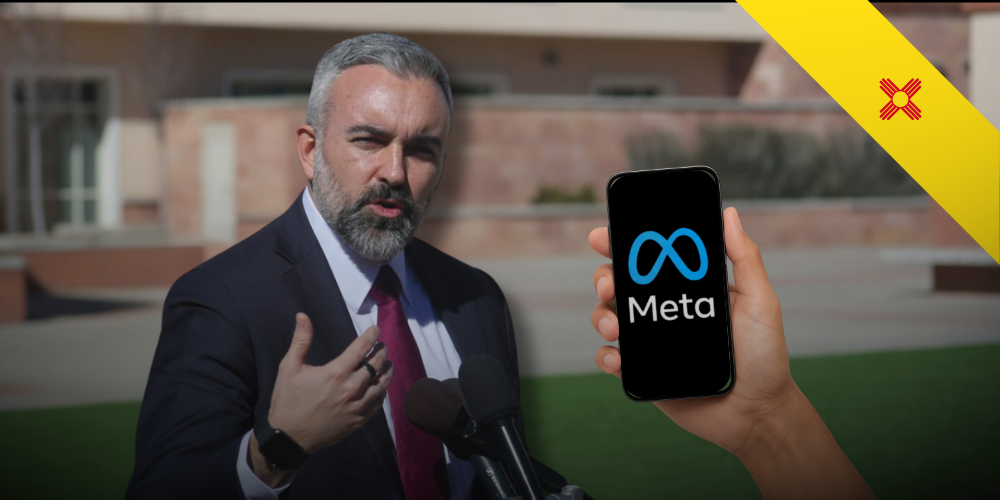
A courtroom in Santa Fe has become the latest battleground over how social media affects children. This week, Meta entered trial in New Mexico’s First Judicial District Court after two years of pretrial litigation.
Twelve jurors and six alternates were seated last week. Judge Bryan Biedscheid will preside over a trial expected to last about seven weeks.
Attorney General Raúl Torrez filed the lawsuit in December 2023 under the state’s Unfair Practices Act. Prosecutors allege Meta’s design choices and recommendation systems made it easier for adults to contact minors on Facebook and Instagram. State investigators created proxy accounts posing as children and documented alleged solicitations and access to explicit material.
Meanwhile, a separate landmark addiction case is underway in California against Meta, TikTok, Google, and Snap. Snap and TikTok have already settled, leaving Meta to face a jury. Zuckerberg is unlikely to testify in person in New Mexico, but sworn depositions and internal records are expected to play a role.
Accordingly, Meta has mounted an aggressive defense. The company says it has expanded protections for young users, including stricter privacy defaults, PG-13 content filters, and safer messaging tools. Spokesperson Andy Stone has called the state’s probe “ethically compromised,” citing proxy accounts and alleged evidence mishandling. Meta is expected to rely on Section 230 of the 1996 Communications Decency Act, which limits liability for user posts.
Furthermore, the financial stakes are high. New Mexico is seeking civil penalties of up to $5,000 per violation of the Unfair Practices Act, potentially reaching tens of millions of dollars.
Torrez is pushing for stronger age verification, faster removal of bad actors, and changes to recommendation systems that surface risky content. As testimony begins, the case will test how far platforms must go to protect minors online.