

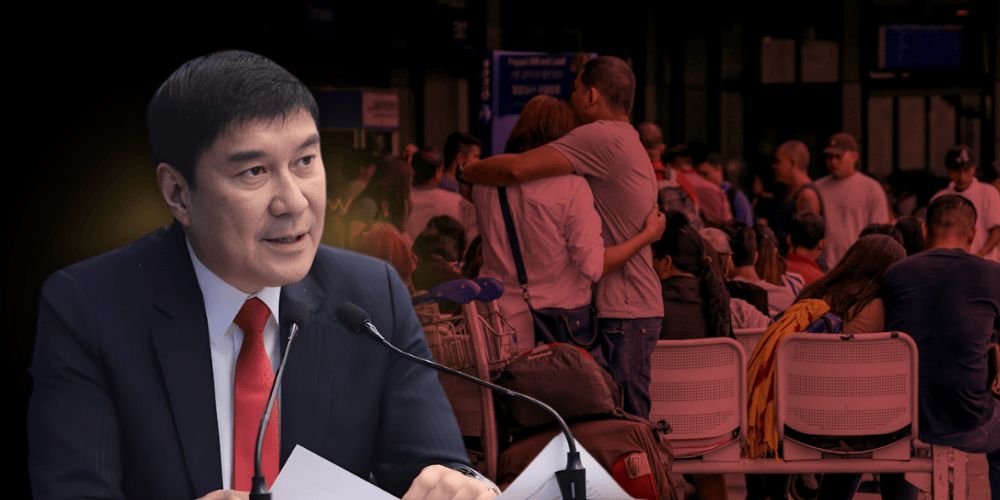
Senator Raffy Tulfo has filed Senate Bill 1657, a measure that seeks to mandate reimbursement for airline passengers who miss their flights after being offloaded during pre-departure immigration procedures without a court order.
The bill, formally titled the Passenger Protection and Reimbursement for Deferred Departures Act, aims to institutionalize compensation for travelers who incur losses after extended immigration interviews result in missed departures. Tulfo said he filed the measure in response to recurring complaints from passengers who were prevented from boarding despite holding valid travel documents, citing inconsistent assessment criteria and the absence of clear explanations or opportunities for re-evaluation.
Under SB 1657, passengers who miss scheduled flights due to prolonged immigration interviews, without a formal court order directing their deferment or denial of departure, may claim reimbursement for travel-related expenses. These include the cost of unused airline tickets as well as reasonable rebooking or accommodation expenses, subject to implementing rules.
Tulfo said the State recognizes the critical role of the Bureau of Immigration in enforcing immigration laws and combating human trafficking, but stressed that passenger rights must also be protected, particularly against financial losses arising from delayed or denied boarding through no fault of the traveler.
The senator noted that some airlines, including Philippine Airlines and Cebu Pacific Air, currently offer refunds or rebooking options for offloaded passengers as a matter of goodwill. These arrangements, however, are not mandated by the Civil Aeronautics Board and depend solely on airline policy, leaving many passengers without guaranteed assistance.
The measure builds on an existing provision in the 2024 General Appropriations Act that allows travel expenses of Filipino passengers offloaded without a court order to be charged against the BI’s Special Trust Fund Account. SB 1657 seeks to establish a permanent statutory basis for this policy and align it with standards of fiscal accountability.
The bill also sets explicit limitations. No reimbursement will be granted to passengers who fail to present complete and valid travel documents, including government employees without proper travel authority, or those covered by an existing court order. Passengers found using forged, counterfeit, or altered documents are likewise excluded, as are individuals identified as potential victims of human trafficking or assessed as suspected illegal recruiters or traffickers under Republic Act 9208.
Claims for reimbursement will be received and initially reviewed by the BI through the International Port of Entry and Exit Management Office at the airport or seaport where the passenger’s departure was deferred. Approved claims will then be endorsed to the Department of Justice Inter-Agency Council Against Trafficking, formally known as Inter-Agency Council Against Trafficking, for final adjudication.