


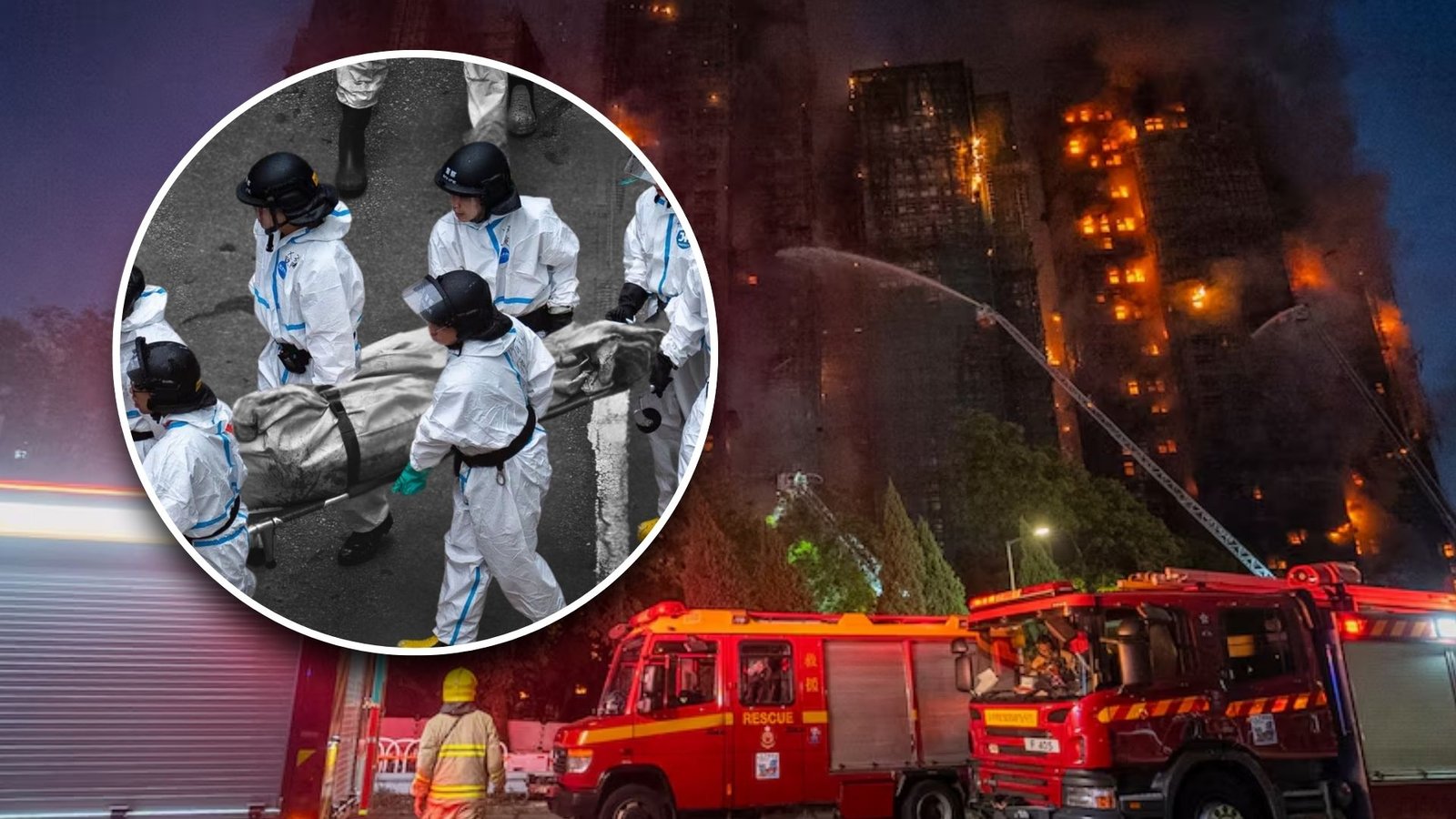
The fire moved through the Wang Fuk Court complex before responders could reach every floor. The towers burned fast because renovation materials trapped heat and blocked windows.
Authorities confirmed 146 deaths, including elderly residents who struggled to escape the smoke-filled corridors.
Several hundred people lost their homes, and the disaster pushed rescue teams into nonstop checks across seven damaged buildings. Investigators entered each tower with strict safety controls because the structure had heavy smoke damage.
The blaze started on renovation scaffolding that wrapped the lower floors. Foam panels and netting surrounded the building for repair work, and these materials ignited quickly. Flames reached several towers and climbed toward the upper levels as winds pushed debris across the complex.
Fire officials reported failed alarms in some units, which limited early warnings for residents. Police arrested construction executives and project consultants after finding signs of negligence tied to the renovation process.
Thousands of displaced residents stayed in temporary shelters while officials tracked their needs. Many lost important documents, medications, and access to their units.
Community groups and volunteers delivered supplies across the shelters because the evacuation left families with very little. Local leaders demanded a full review of renovation rules and inspections, especially for old high-rise blocks across Hong Kong.
Filipino workers were among the affected residents. The Philippine Consulate confirmed one OFW fatality and reported that others were injured or still under verification. Migrant groups monitored the situation because many workers lived in units near the burned floors.
The case highlighted how safety failures strike hardest in dense buildings where migrants often live and work. The event now pushes both communities to call for stronger housing policies, clearer renovation standards, and faster enforcement to prevent another disaster of this scale.