
Senator Kiko Pangilinan criticized the Chinese Embassy in Manila over what he described as improper diplomatic conduct, after the embassy issued a public warning through its deputy spokesperson following criticism from Philippine officials.
The issue began after the Chinese Embassy filed a diplomatic protest over a presentation involving Jay Tarriela, the Philippine Coast Guard spokesperson for the West Philippine Sea. The protest stemmed from a social media post showing Tarriela speaking at a student dialogue, with a screen behind him displaying what appeared to be AI-generated images of Chinese President Xi Jinping in exaggerated poses.
Senator Risa Hontiveros publicly criticized the embassy over the protest, calling it a “bad guest” in the Philippines and stressing that Filipinos could not be silenced. “Hindi kami pwedeng manahimik. Hindi pwedeng manahimik lamang si Commodore Tarriela. Di kami pwedeng tumigil dahil baka ma-hurt yung feelings ng Chinese Embassy,” Hontiveros said, adding that it was the government’s duty to advance the interests of the Philippines and the Filipino people.
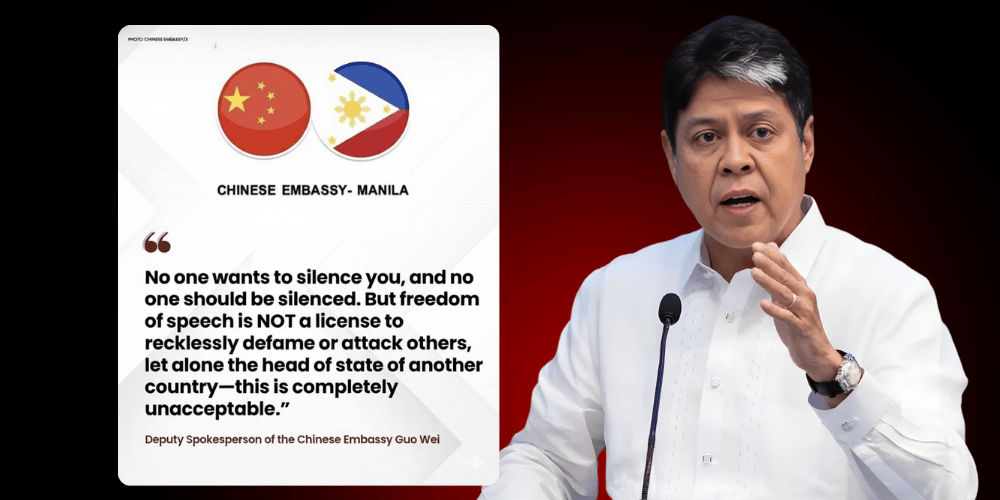
Following those remarks, the Chinese Embassy issued a statement attributed to Deputy Spokesperson Guo Wei, warning that freedom of speech was not a license to attack a foreign head of state. “No one wants to silence you, and no one should be silenced. But freedom of speech is NOT a license to recklessly defame or attack others, let alone the head of state of another country—this is completely unacceptable,” the statement said.
Pangilinan responded after the statement was released, sharply criticizing both the substance and the manner of the embassy’s response. He questioned why the warning was issued by a deputy spokesperson instead of the Chinese ambassador, saying the move undermined diplomatic accountability. Pangilinan said statements on sensitive bilateral issues should come directly from the head of mission, not be delegated to a subordinate.
“When the Chinese Embassy spokesman himself finds the courage and chooses to be brave enough for him to say what he has instructed his deputy to say, instead of hiding comfortably behind his deputy, I will respond,” Pangilinan said. He described the move as “duplicitous and cowardly,” adding that it was inappropriate for a lower-ranking official to lecture Filipinos on matters of foreign relations.
He also said the embassy’s approach showed a lack of respect for Philippine institutions and officials performing their duties. Pangilinan argued that the Philippines should not allow foreign diplomats to set the boundaries of local public discourse or intimidate officials through diplomatic warnings.
Pangilinan called on the Department of Foreign Affairs, Republic of the Philippines to assert diplomatic norms by summoning the Chinese ambassador and filing a formal protest. He urged Foreign Affairs Secretary Tess Lazaro to make clear that statements perceived as insulting or condescending would not be tolerated. “We must not tolerate such insulting behaviour done by Chinese diplomats in our own country,” he said.