


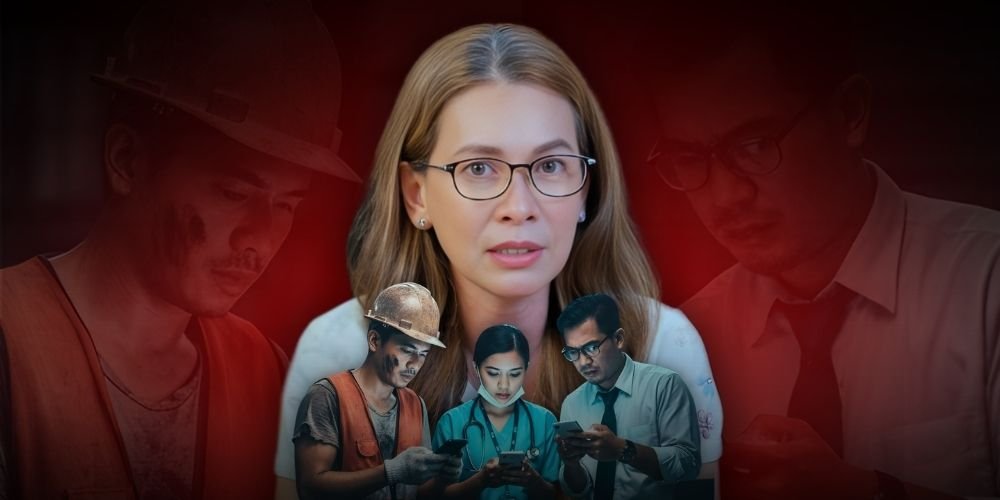
Peanut Gallery Media Network‘s first tech anchor Ann Cuisia explains the government’s newly launched AI-powered transparency portals for PhilHealth and the Social Security System, saying the platforms fall short of real accountability and reduce transparency to polished dashboards and summaries.
Watch the Full Episode:
In a recent PGMN episode produced in collaboration with technology activist Jason Torres of BetterGovPH, Cuisia examined the portals hosted on open.gov.ph, which the Department of Information and Communications Technology has promoted as a major step in digital governance. Government agencies and local governments have described the initiative as a way to make public spending clearer, more open, and more accessible by allowing citizens to type questions and see where public money goes.
Cuisia said the portals look modern and serious on the surface, but present a different reality once examined closely. The PhilHealth transparency site promises complete transparency and features dashboards, charts, and a library of annual reports from 2003 to 2024 based on agency records and Commission on Audit audited statements. The SSS portal presents similar financial records, benefits data, and performance metrics.
She said that beneath the interface and artificial intelligence branding, the portals largely repackage existing annual reports and PDF documents into visual summaries. According to Cuisia, these are disclosures the government is already required to make, now presented as if they were a breakthrough in accountability.
“Dashboard will never be enough to clean up a system that is used to hiding in the dark,” Cuisia said, adding that the portals show outputs but not the process behind decisions and spending.
Cuisia and Torres pointed out that the platforms do not allow users to trace money at the transaction level. Citizens cannot click on PhilHealth spending totals to see which hospitals were paid for which cases, nor can they cross-check SSS investment income against specific placements, counterparties, or fees. What users see instead are summaries, charts, and after-the-fact documents.
“Walang line by line, walang malinaw na trail, walang public API na pwedeng i-audit ng civil society o ng media,” Cuisia said, describing the portals as presentations rather than transparency.
The discussion also questioned the role of artificial intelligence in the current setup. Torres said the AI tools appear to rely on the same static data already available in reports and PDFs. Without granular, timely, and verifiable data, he said, artificial intelligence cannot uncover new information and can only restate what is already disclosed.
Cuisia warned that promoting this model as a standard for other agencies risks prioritizing optics over substance, especially for institutions that manage hundreds of billions of pesos drawn from workers’ salaries and employer contributions. She asked whether it is acceptable for transparency to stop at dashboards and charts given the scale of public funds involved.
The episode outlined higher standards for disclosure, including transaction-level data for contributions, benefits, and claims with proper privacy safeguards, contract-level information for investments and information technology systems, clear links from the national budget to agency allocations and actual disbursements, and machine-readable formats that independent analysts can scrutinize.
Both speakers said the portals are not useless and represent a step above silence. However, they warned that labeling the current level of disclosure as complete transparency misleads the public and reinforces a culture of settling for “pwede na yan.”
Torres said civic technologists have already demonstrated that deeper transparency is possible by working with raw procurement and budget data released by government, allowing users to trace projects, vendors, contract values, and patterns across agencies and localities.
Cuisia closed by calling on public officials to raise their standards and engage the technology community, saying many professionals are willing to help if agencies are open to real scrutiny. She said taxpayers deserve more than polished dashboards and marketing language.
“Tayong taxpayers ang bumubuhay sa bansa,” she said. “The least government can give in return is real, verifiable, inescapable transparency.”