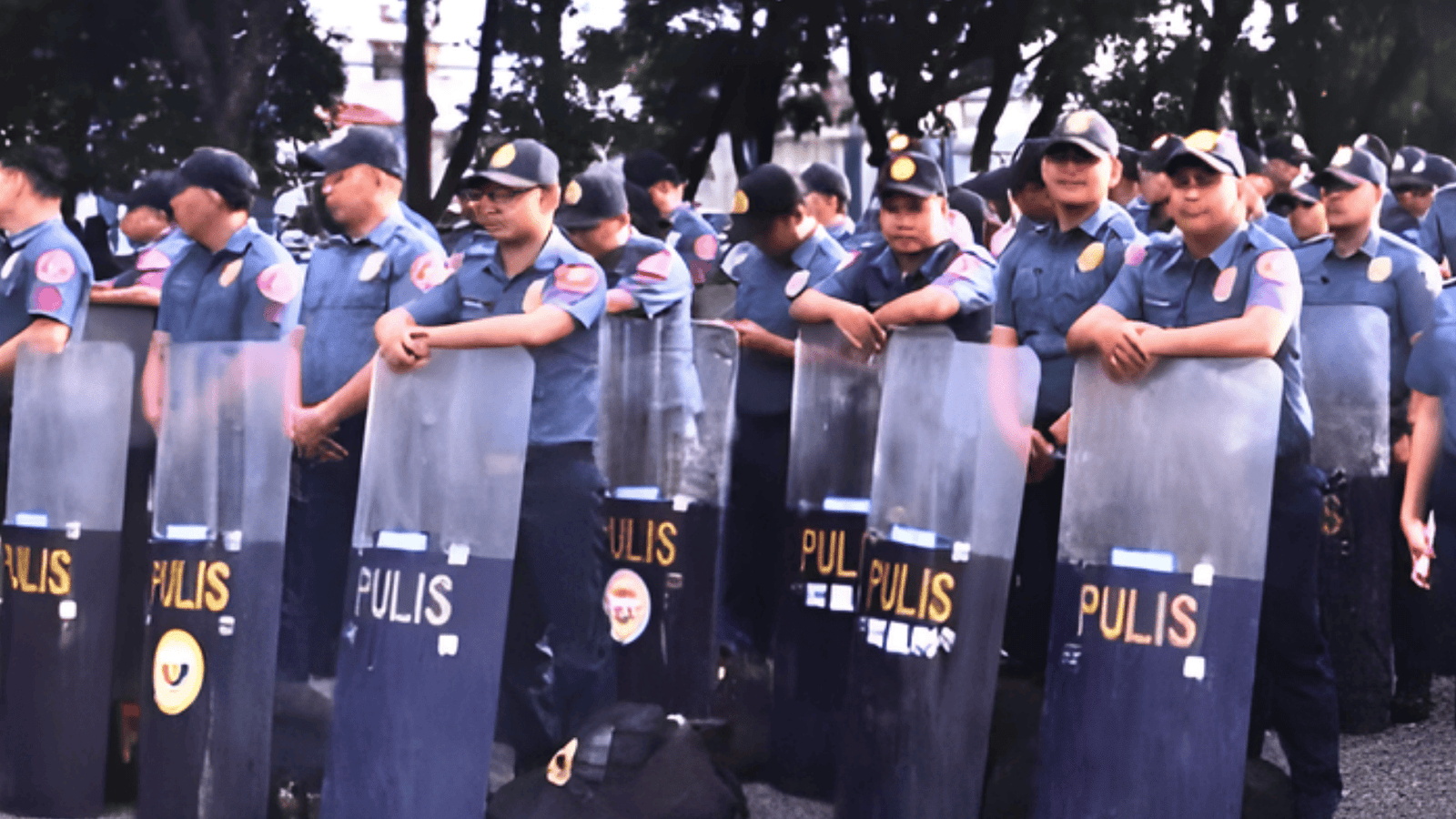
The Philippine National Police (PNP) is deploying over 15,000 police officers for the second Trillion Peso March, but the force’s presence is being described as a matter of readiness rather than intimidation. Acting PNP chief Lt. Gen. Jose Melencio Nartatez Jr. said the increased police visibility is aimed at ensuring rapid response to potential emergencies or legal violations during the protest, which is expected to attract a large crowd.
“The deployment is not about intimidation, it’s about readiness. We expect a large number of crowds in multiple activity areas so our personnel on the ground should be quick in responding to emergencies and even any violation of the law,” Nartatez said.
The protest, organized at the People Power Monument, is being monitored by the PNP, with expectations of up to 300,000 participants. The only authorized rally site is at White Plains Avenue, from 6 a.m. to 6 p.m. on Sunday, and no other areas are permitted for the gathering.
Despite the large police presence, Nartatez emphasized that there would be no aggressive action. “Let me be clear that law enforcement presence does not mean aggressive action. The order for maximum tolerance still remains,” he clarified.
However, the PNP is on the lookout for any potential infiltration attempts, referencing the September 21 rally in Manila that saw significant unrest. In response to this, Nartatez stated, “There are always these kinds of considerations in mass gatherings. Our intelligence monitoring is focused on potential agitators.”
The September 21 rally, which led to over 200 arrests including two minors, left human rights groups questioning the PNP’s handling of the situation, especially as two deaths occurred amid the chaos. Nartatez, however, maintains the PNP’s commitment to “maximum tolerance” for peaceful demonstrations, insisting on “zero tolerance” for violence.
Both iterations of the Trillion Peso March are part of a broader movement questioning the allocation of funds in flood control and other infrastructure projects. The protests are stirring up conversation on the government’s priorities and the alleged corruption within large-scale projects meant to address critical issues like flooding in the Philippines.
As the march approaches, all eyes are on how the PNP will balance security with citizens’ right to protest, a point that remains contentious in the country’s political landscape.