

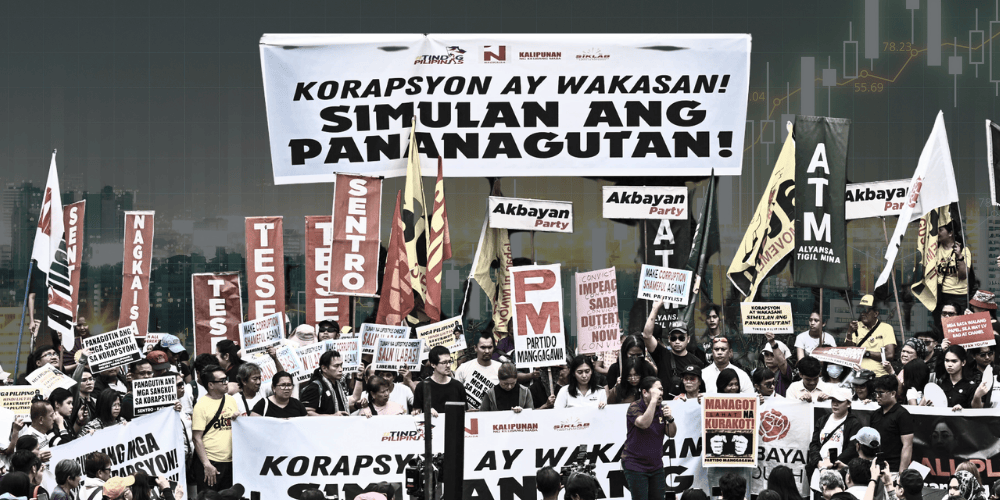
Ninety four percent of Filipino adults believe corruption in the Philippine government is widespread, according to a nationwide survey conducted by Pulse Asia Research Inc. in December 2025.
The finding reflects a near universal perception that corruption cuts across institutions and persists regardless of region or social class. In the National Capital Region, 96 percent of respondents said corruption in government is widespread. The same view was shared by 93 percent of respondents in Luzon, 96 percent in the Visayas, and 94 percent in Mindanao, showing minimal variation across the country.
The survey also found that 74 percent of adults believe corruption in government has increased over the past 12 months. While this figure is lower than the 85 percent recorded in September 2025, it still indicates that a clear majority of Filipinos see the problem as worsening rather than improving.
When asked whether corruption is a normal part of Philippine politics, public opinion was sharply divided. Forty three percent of respondents said they disagreed with the idea, while 41 percent said they agreed, pointing to a narrow split between those who reject corruption as acceptable and those who see it as an entrenched feature of the political system.
Differences emerged by region and socio economic group. A majority of respondents in Mindanao at 58 percent said they do not view corruption as a normal part of politics. The same position was held by 51 percent of respondents belonging to Class C. In contrast, half of respondents in Metro Manila and 48 percent of those in the Visayas said corruption is already a normal part of how politics operates.
The results highlight a deep crisis of confidence in government, with most Filipinos convinced corruption remains pervasive, even as the public remains divided on whether it has become an accepted reality or a condition that should still be challenged.