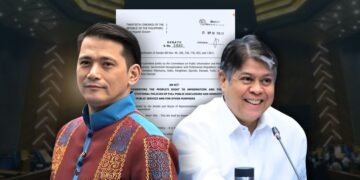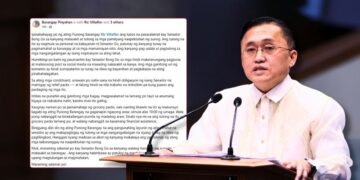


House Speaker Faustino “Bojie” Dy III underscored the need to keep the House of Representatives of the Philippines focused on legislative measures addressing the impact of the Middle East crisis, as remarks from Ronaldo Puno raised questions about accountability in the budget process.
In his statement, Dy emphasized that the House had already fulfilled its constitutional role by passing the national budget, which he described as the most important measure of the institution. He said it was approved promptly, transparently, and equitably to support the administration’s direction and respond to the needs of Filipinos.
Puno, meanwhile, expressed dissatisfaction over the delayed release of funds for projects in several districts, noting that these were marked “for later release” by the Department of Budget and Management. He said their group would discuss whether to leave the Majority bloc and step down from leadership posts.
At the same time, Puno spoke positively of Majority Leader Sandro Marcos, the President’s son, even as the concern he raised centers on fund releases handled by an agency under the Executive branch.
The issue highlights a key distinction in the budget process. Congress enacts the General Appropriations Act, while the release of funds is carried out by the Executive through DBM, with implementing agencies such as the Department of Public Works and Highways executing projects. Classifications such as “for later release” fall within DBM’s budget execution process.
Puno also clarified that the matter is not related to the impeachment proceedings involving Sara Duterte, noting that they supported the motion to declare the remaining complaints sufficient in substance.
Dy did not directly address the criticism but emphasized that his office remains open to colleagues and that concerns should be resolved through dialogue. He called on members, committees, and staff to focus on legislation that will help Filipinos deal with the effects of the Middle East crisis.
He added that the House remains committed to ensuring that public funds translate into concrete programs, infrastructure, and services for communities, and that the welfare of the Filipino people remains its primary priority.