


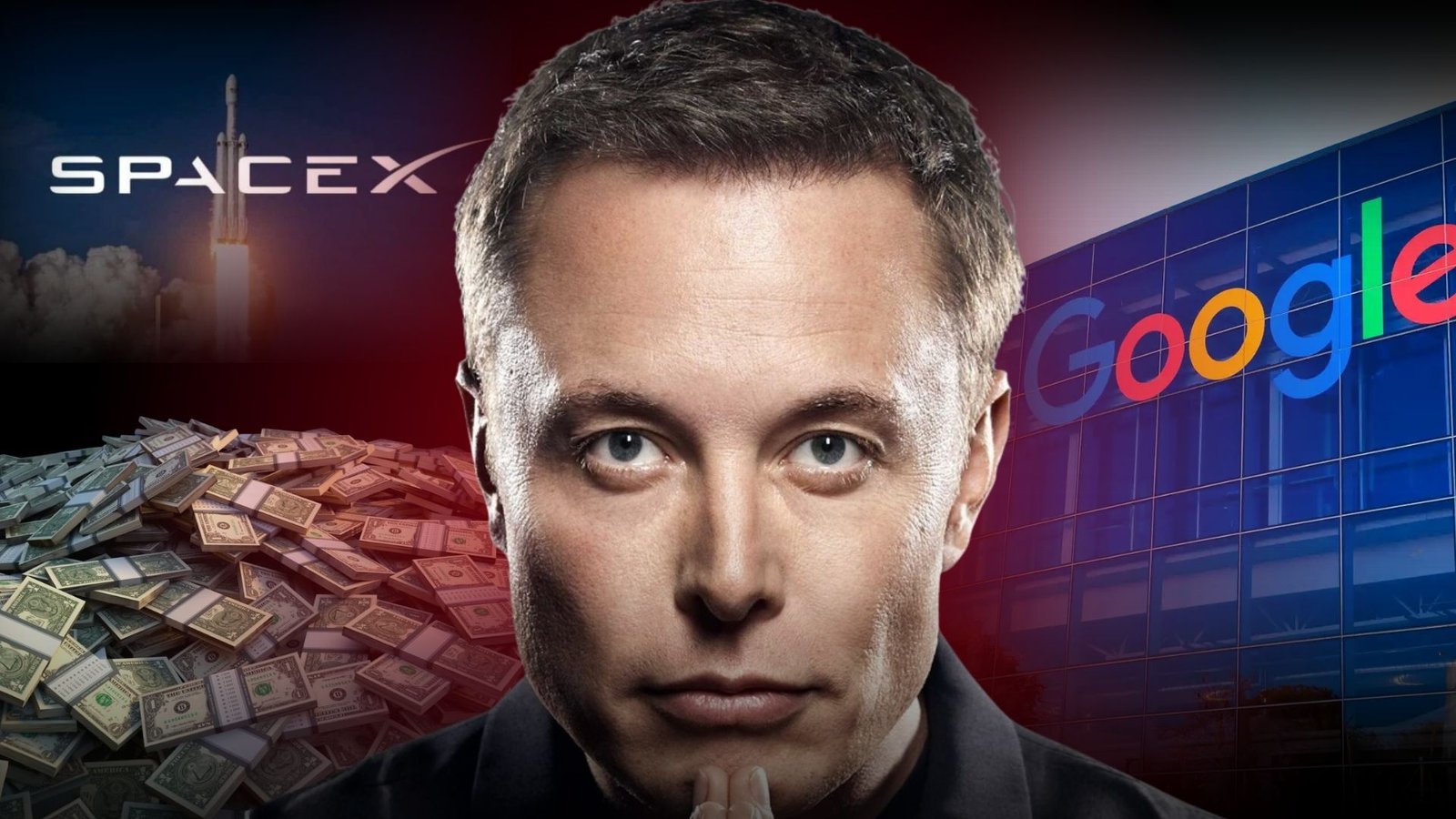
Elon Musk’s long term strategy at SpaceX is drawing renewed attention as a 2015 investment by Google emerges as one of the most valuable bets ever made on a private technology company.
In January 2015, SpaceX took in about 1 billion dollars from Google and Fidelity at a valuation of roughly 12 billion dollars. Google’s portion of the deal amounted to about 900 million dollars, securing an estimated 7 to 7.4 percent stake and making the company one of SpaceX’s largest outside investors. The decision was notable given Musk’s history of tightly controlling ownership and governance across his businesses.
At the time of the investment, SpaceX was still in the early stages of commercializing reusable rockets and had not yet built Starlink into a global satellite internet network. The company was widely viewed as ambitious but unproven, with heavy capital needs and long timelines before profitability.
A decade later, SpaceX’s position in the aerospace and communications sectors has fundamentally changed. By 2025, private market transactions and analyst estimates placed the company’s valuation near 350 billion dollars, lifting the paper value of Google’s stake to roughly 25 to 30 billion dollars.
The figures become significantly larger under scenarios now circulating in financial markets that place a possible SpaceX initial public offering in 2026 at around a 1.5 trillion dollar valuation. At that level, Google’s roughly 7 percent holding would be valued at approximately 105 to 111 billion dollars, representing a massive increase from the original 2015 investment.
SpaceX remains privately held as of late 2025, and no formal IPO filing has been made. Reports of a potential 2026 listing are based on internal planning discussions cited in media coverage rather than confirmed regulatory action. Musk has also previously raised the possibility of listing Starlink separately, but timing and structure remain unresolved, making all IPO related figures scenario based rather than confirmed outcomes.
Beyond the equity stake, the relationship between Musk and Alphabet extends into infrastructure. In 2021, SpaceX and Google entered a partnership that integrates Starlink with Google Cloud. Under the arrangement, Starlink ground stations are located at Google data centers, and satellite traffic is routed through Google’s private network. This allows enterprise and public sector users to access cloud services via Starlink in remote and underserved locations.
If SpaceX ultimately goes public anywhere near the valuations being discussed, the 2015 investment will stand as a defining moment in Musk’s approach to capital and control. The deal shows how a single, carefully timed partnership helped scale SpaceX while preserving Musk’s dominance over the company and positioning it for one of the largest potential returns in tech history.