

What happens to the brain when gravity disappears for months at a time? New research suggests the effects go deeper than previously understood. Scientists now report that astronauts’ brains physically shift and change shape during space missions. The findings add urgency as agencies plan longer journeys beyond Earth.
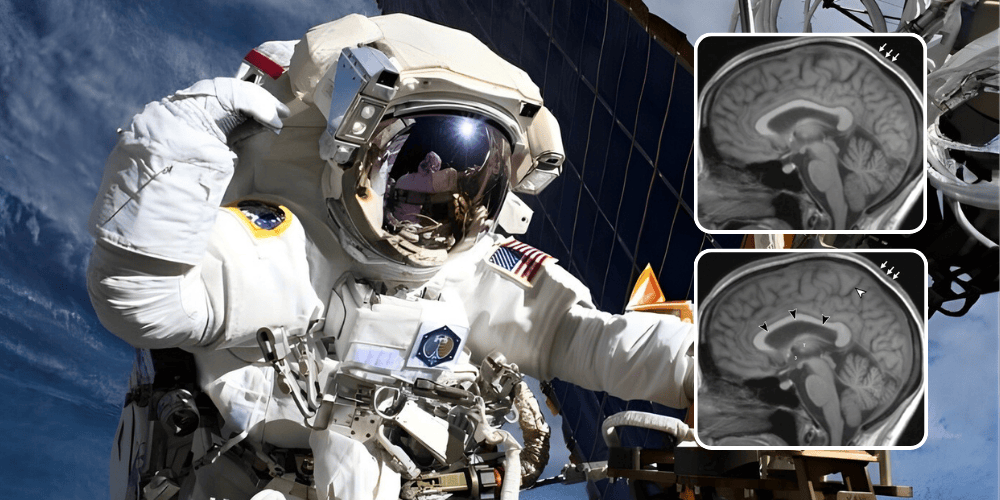
The study, published in the Proceedings of the National Academy of Sciences, examined MRI scans from 26 astronauts before and after spaceflight. Researchers found the brain moved upward and backward inside the skull. Regions involved in movement, balance, and sensory control showed the largest changes.
Scientists linked these changes to microgravity. On Earth, gravity and the surrounding fluid help stabilize the brain. In space, bodily fluids drift toward the head, allowing the brain to stretch, compress, and shift. These changes vary by region rather than affecting the brain evenly.
To better isolate the cause, researchers compared astronauts with 24 civilians on Earth. The volunteers spent 60 days in a head-down tilt position to simulate fluid movement. Both groups showed brain changes, but astronauts experienced greater upward shifts. Time spent in space played a key role.
Some effects carried real consequences. Astronauts with larger brain shifts had more trouble maintaining balance after returning to Earth. Changes in areas linked to coordination appeared most disruptive. Researchers did not find serious cognitive damage, but physical adjustment proved challenging.
Recovery brought partial reassurance. Most brain changes eased within six months, though some deformation remained. Professor Rachael Seidler said understanding these shifts is critical for astronaut safety. As missions to the Moon and Mars move closer, the study highlights risks that still demand answers.