

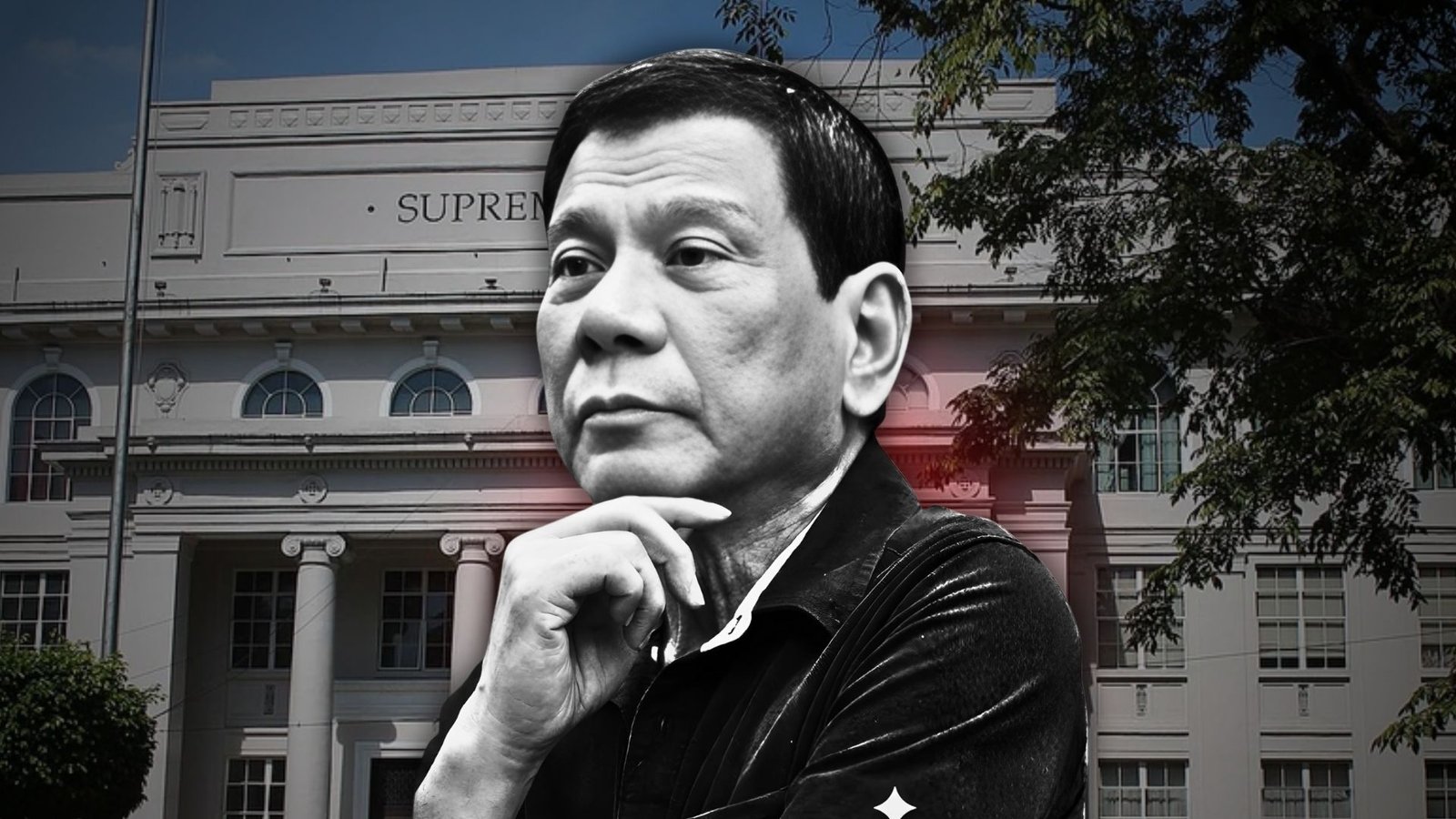
The PANELO LAW OFFICE confirmed that it filed an Urgent Motion to Resolve and to Direct Respondents to Facilitate the Immediate Return of former President Rody Duterte before the Supreme Court on November 18, 2025, seeking prompt resolution of the consolidated habeas corpus petitions that have been pending since March 12, 2025.
Filed on behalf of Kitty Duterte, the motion covers G.R. Nos. 278763, 278768, and 278798 that question the legality of Duterte’s arrest and transfer to the International Criminal Court. The filing reiterates that habeas corpus is a constitutional remedy designed to provide immediate judicial protection against unlawful restraint and that prolonged delay weakens judicial review and the protection of individual liberty.
After the urgent motion was filed, the Supreme Court, in an En Banc resolution dated November 11, 2025, but released only on November 28, 2025, required all parties to submit their respective memoranda within a non-extendible period of 30 days and identified the constitutional and legal questions it intends to resolve, placing the petitions under active judicial review. For Veronica Duterte’s camp, the deadline is on December 29, 2025.
The Supreme Court identified key issues for determination, including whether the controversy remains justiciable despite Duterte’s detention abroad, whether Philippine officials acted within the bounds of law in carrying out directives related to the ICC, and whether recognized exceptions to mootness apply. The Court also directed the parties to address whether the ICC may validly exercise jurisdiction over Duterte despite the Philippines’ withdrawal from the Rome Statute.
The resolution further requires discussion on whether Republic Act No. 9851 remains applicable after withdrawal, whether the principle of complementarity was properly applied or waived by the Executive, and whether any obligation to cooperate with the ICC continued after withdrawal. The Court likewise raised whether its intervention would encroach on executive authority in matters of foreign relations.
On the core habeas corpus issues, the Supreme Court ordered the parties to fully address whether a writ should issue. These include whether Duterte’s arrest complied with domestic and international law, whether the Interpol communication relied upon was a red notice or a diffusion, whether such notices have the force of a domestic warrant of arrest, and whether Duterte was arrested and surrendered without a warrant issued by a Philippine court as required under the Constitution. The Court also raised whether Duterte’s detention lacks legal authority, whether his constitutional and statutory rights were violated, and whether Section 17 of Republic Act No. 9851 validates the procedure used in his arrest and surrender. The parties were also directed to inform the Court of any developments relevant to the case.
The urgent motion highlighted the consequences of continued delay, citing concerns over Duterte’s condition while in foreign custody and stressing the need for timely judicial action to prevent further harm. It also underscored the importance of clear judicial guidance to avoid similar situations involving other Filipino citizens, including Senator Ronald Bato Dela Rosa.
To address arguments that the case has become moot, the motion cited jurisprudence affirming the continuing reach of habeas corpus even when a detainee is held outside the country, so long as the officials responsible remain within the Court’s jurisdiction and have the capacity to undo the alleged wrong.
Soon after the En Banc resolution, the Office of the Solicitor General entered its appearance as counsel for the State in the related petition for certiorari filed by Duterte and Senator dela Rosa. On December 4, 2025, Solicitor General Darlene Berberabe all but confirmed in an interview that the OSG will also represent the government in the habeas corpus petitions filed by Duterte’s children.
Reacting to the OSG’s entry into the case, Atty. Salvador Paolo Panelo, Jr. of the Panelo Law Office stated, “It does not matter who represents the government because you can’t defend the indefensible. Treason can’t be disguised as international cooperation, and submission to the Constitution can’t be optional. Former Solicitor General Menardo Guevarra got it right the first time.”
With the Supreme Court having defined the issues and required comprehensive memoranda from all parties, the consolidated habeas corpus cases have entered a decisive phase. The review now places the legality of the former president’s arrest, detention, and surrender squarely before the Court, with implications for constitutional protections, executive authority, and the scope of judicial oversight.