


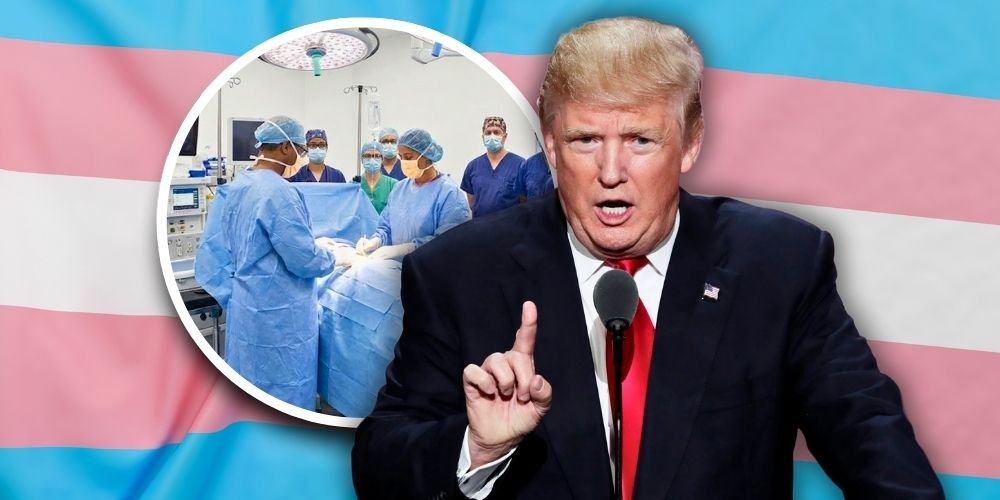
President Donald J. Trump moved on December 19 to enforce a nationwide restriction on transgender medical procedures for minors by cutting off federal health care participation for hospitals and doctors that provide them, a step the administration framed as a decisive move to protect children and tighten medical accountability.
Federal health officials said hospitals that offer treatments such as puberty blockers or surgeries to transgender minors would be barred from participating in Medicare and Medicaid. The policy would also block federal coverage for those procedures, effectively removing taxpayer support from institutions that continue to provide them.
“These procedures fail to meet professionally recognized standards of care,” US Health and Human Services Secretary Robert F. Kennedy Jr. said, calling many forms of transgender care for minors “malpractice.” He added, “Medical professionals or entities providing sex-rejecting procedures to children are out of compliance with these standards of health care.”
Administration officials said the action is rooted in medical oversight rather than ideology, arguing that the federal government has a duty to ensure that public health programs do not finance treatments they say lack sufficient evidence when applied to children.
Medical associations criticized the move, warning that it interferes with physician-patient relationships. Dr. Susan Kressly of the American Academy of Pediatrics said the policy allows the government to determine which patient groups receive care, a position she said would leave families facing serious consequences.
The administration responded that mental health support for transgender youth will remain available. Health officials said federal policy will emphasize psychosocial assessment and what they described as compassionate, developmentally appropriate counseling, while acknowledging ongoing shortages of mental health providers nationwide.
The action fits into a broader set of Trump administration measures affecting transgender-related policies across federal agencies, including changes to federal health data practices, limits on military service and legal challenges involving school sports participation.
Other agencies announced related steps the same day. US Food and Drug Administration Commissioner Marty Makary said the agency is sending warning letters to 12 companies marketing breast binders for the treatment of gender dysphoria in children. National Institutes of Health Director Jay Bhattacharya said federal support for research into gender transition will end, stating, “It was junk science to begin with.”
Civil liberties groups said they plan to challenge the rules in court. The American Civil Liberties Union called the measures unconstitutional. Kennedy said the administration is confident its approach will withstand legal scrutiny. “If people sue us, they’re welcome to,” he said.
The announcement followed the House passage of legislation that could impose criminal penalties on health care providers who deliver certain transgender treatments to minors. The bill, sponsored by Marjorie Taylor Greene, would allow prison sentences of up to 10 years. Its future in the Senate remains uncertain.
Administration officials said their review relied on assessments of existing medical evidence and experiences from other countries, arguing that irreversible medical interventions involving children demand a higher standard of proof. The White House said the policy reflects its broader commitment to place child welfare and accountability at the center of federal health policy.