


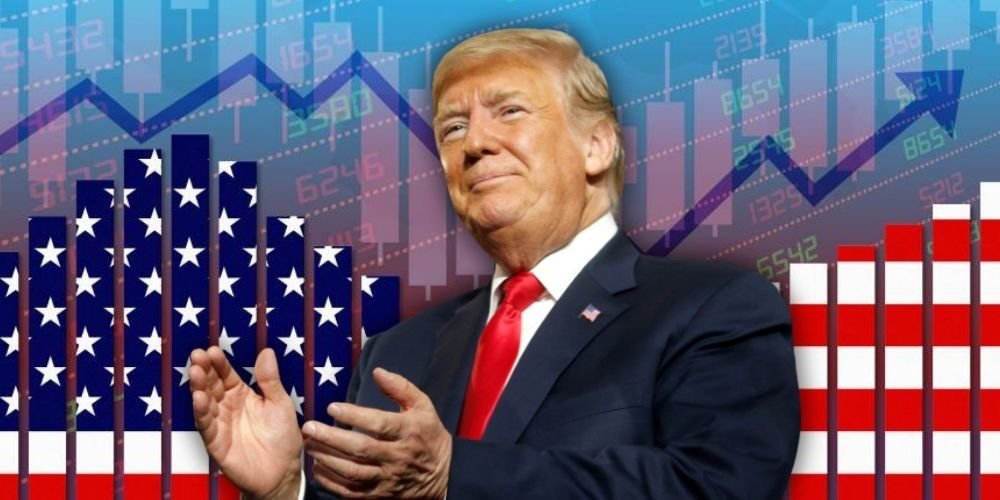
In a prime-time Super Bowl interview, President Donald J. Trump declared that the “Trump economy” is already in place. Speaking with NBC News’ Tom Llamas, he framed this as a present reality.
The remark landed at a moment when headline growth looks strong, yet many Americans still feel the strain of high prices. The contrast between data and daily life gives his statement political weight.
“I’d say we’re there now… I’m very proud of it,” Trump said during the taped Oval Office interview that aired Feb. 9.
Accordingly, Trump tied his confidence to claims of rapid economic momentum. He argued that Democrats had stopped talking about “affordability” and that he inherited “a mess in every way.”
Meanwhile, the growth picture itself is uneven. The Labor Department reported 4.4 percent annualized GDP growth in the third quarter of 2025, a strong reading by historical standards, yet still below Trump’s claim of 5.6 percent.
The economy also contracted in the first quarter of 2025, partly because of anticipated trade and tariff policies. Fourth-quarter data remain unavailable due to a government shutdown, leaving space for competing narratives.
The most recent official data show the U.S. economy grew at an annualized rate of 4.4 percent in the third quarter of 2025, a historically strong reading even if it fell short of Trump’s 5.6 percent claim. Economists note that this headline strength sits alongside a first-quarter contraction earlier in 2025, underscoring why growth has felt uneven to many Americans.
At the same time, public opinion remains skeptical: an NPR/Marist/PBS survey showed only 36 percent of adults approve of his handling of the economy, while 59 percent disapprove. Last year’s off-cycle elections in Virginia, New Jersey, and New York turned heavily on voters’ cost-of-living concerns.
Furthermore, inflation has cooled from its peak but still sits above the Federal Reserve’s 2 percent target, keeping interest rates elevated. Job creation has softened compared with the post-pandemic boom, even as unemployment remains relatively low. Consumer spending has stayed resilient, while technology and AI investment continue to support growth.