


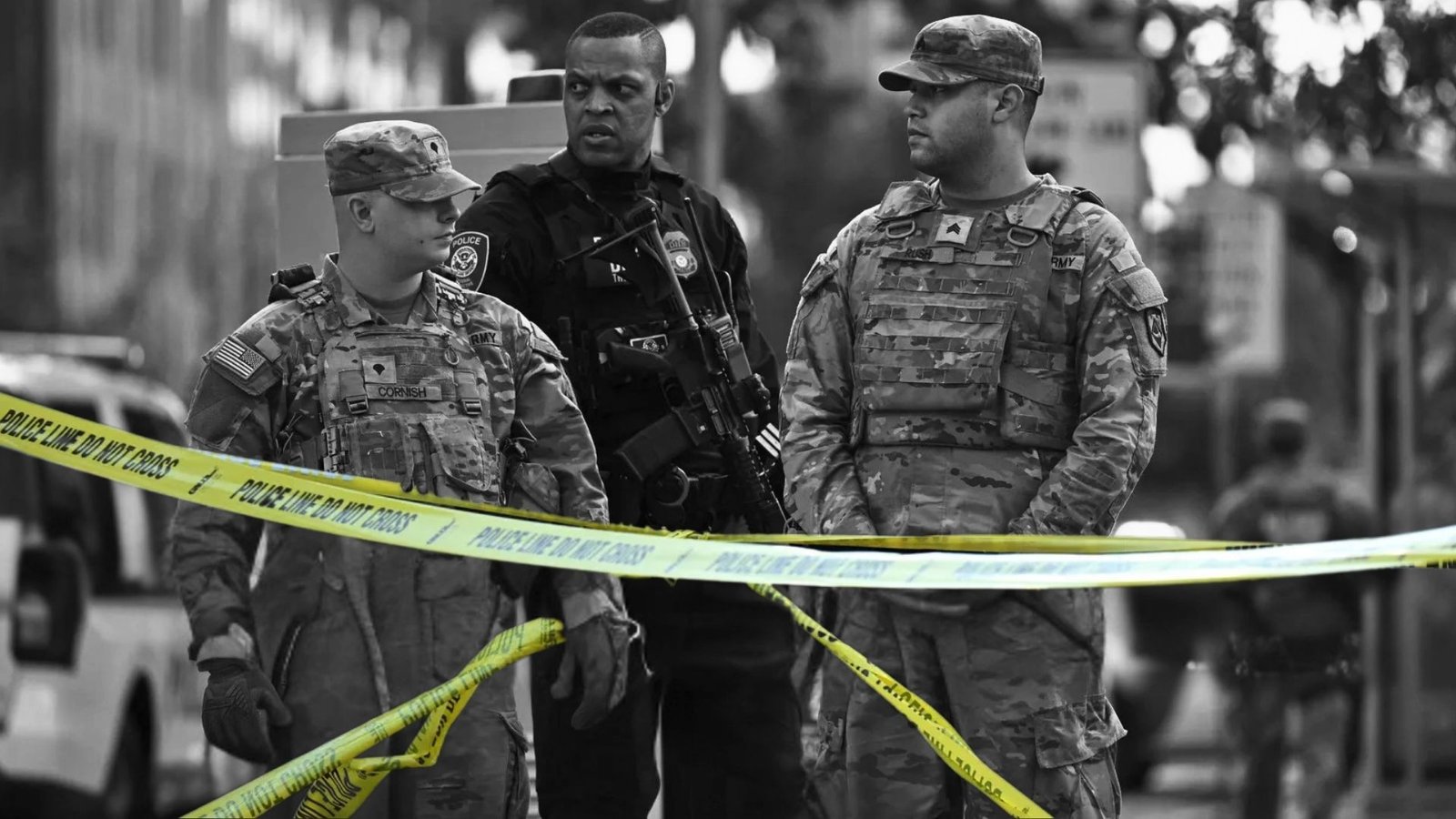
Gunfire snapped through a busy Washington afternoon, and people near Farragut Square watched two National Guardsmen fall to the ground just blocks from the White House.
The attack stopped traffic, sent crowds running, and pulled officers into the streets as sirens echoed across downtown. Witnesses saw first responders perform CPR on the sidewalk while police pinned down a wounded suspect nearby.
The chaos traveled fast through the city because these troops had patrolled D.C. for months under Trump’s heavily disputed deployment order. The shooting instantly shifted the mood in the capital and raised fresh questions about security around the country’s most-watched area.
Authorities said the soldiers stood on duty when a man walked up and opened fire at close range. One of the Guardsmen returned fire, leaving the suspect injured before officers closed in.
Federal agents from the Secret Service, ATF, and other units rushed to the scene as helicopters circled overhead. Investigators reviewed surveillance footage to determine if the shooter planned the attack or acted alone, and early assessments pointed to a targeted assault. Both Guardsmen remained in critical condition after being taken to separate hospitals.
Trump, who was in Florida, received immediate updates and ordered an additional 500 National Guard personnel into the capital. His decision increased the already large military presence, with more than 2,000 troops stationed across Washington.
The move came at a tense moment because a federal judge recently ruled his deployment unlawful, although the ruling is on hold while the administration decides its next steps. Residents described the scene as a sudden shock, especially with National Guard units appearing in nearly every corner of the city during recent months. The attack intensified concerns about whether the current strategy is creating stability or exposing new vulnerabilities.
The shooting placed national attention on a single question: how an armed attack reached soldiers patrolling a highly monitored zone. It also pushed policymakers to confront the growing strain between federal authority and local control as the capital adjusts to an expanded military footprint.
As investigators build a clearer picture of the gunman’s motive, Washington now faces a renewed debate over safety, force, and the future of the city’s security approach.