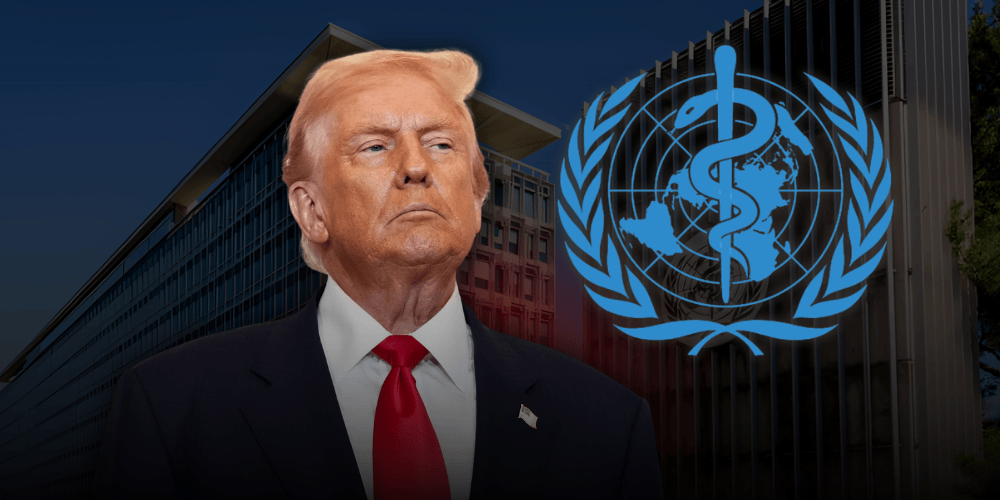
The United States has formally withdrawn from the World Health Organization, ending its membership and participation in the global health body after a yearlong withdrawal process required under US law.
The withdrawal completes an initiative pursued by President Donald J. Trump, who first attempted to leave the organization during his previous term and issued an executive order on the first day of his current term to restart the process. Under US statutes, withdrawal requires a one-year notice and settlement of all outstanding financial obligations.
US officials acknowledged that the country still owes the WHO an estimated $260 million in unpaid dues. Legal experts said the United States is unlikely to pay the balance and that the WHO has limited ability to compel payment. While the organization could formally object to the withdrawal on legal grounds, analysts said it is unlikely to escalate the dispute.
In announcing the withdrawal, the US Department of Health and Human Services said all US government funding to the WHO has been terminated. US personnel and contractors assigned to the organization have been recalled, and the United States has ceased participation in WHO-led committees, governance bodies, and technical working groups.
The administration said the decision was based on long-standing concerns about the WHO’s performance and alignment with US interests. Officials cited what they described as failures during the Covid-19 pandemic, including delays in declaring a global public health emergency, public praise of China’s early response despite later findings of underreporting, and slow acknowledgment of airborne transmission and asymptomatic spread. Senior officials also said the United States did not receive sufficient influence or benefit relative to its financial and personnel contributions.
Despite the withdrawal, the administration said the United States intends to remain active in global health efforts. Officials said future cooperation will rely on bilateral agreements with individual countries, partnerships with non-governmental and faith-based organizations, and direct engagement with foreign health ministries. This strategy is expected to be led by the Centers for Disease Control and Prevention through its global health programs.
US officials left open the possibility of limited technical engagement with the WHO on specific matters, such as discussions related to seasonal influenza vaccines, but said broader participation in the organization’s governance and programs has ended. Additional details of the administration’s global health strategy are expected to be announced in the coming months.
Public health experts and medical organizations warned that the withdrawal could weaken disease surveillance and delay responses to future outbreaks. Critics argued that bilateral arrangements cannot fully replace the WHO’s role in coordinating global data sharing, early warning systems, and international health responses. WHO officials have previously said the US exit would be detrimental to both the United States and the broader global health system.