

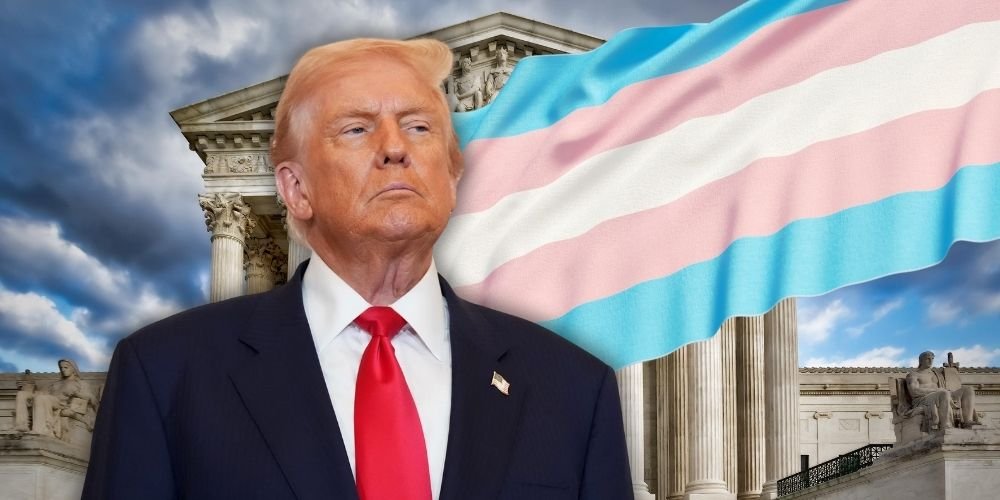
The United States is moving aggressively to restrict transgender women from competing in girls’ and women’s sports, with the issue now before the country’s highest court and reinforced by federal and state action.
The US Supreme Court on Tuesday agreed to hear challenges to state laws in Idaho and West Virginia that bar transgender athletes from participating in female sports competitions. The cases place the court at the center of a growing national effort to define eligibility in women’s sports based on biological sex.
More than two dozen US states have passed laws in recent years prohibiting athletes who were assigned male at birth from competing in girls’ or women’s sports. The Idaho case stems from the state’s 2020 Fairness in Women’s Sports Act, which was challenged by a transgender athlete at an Idaho university. Lower courts ruled that the law violated the equal protection clause of the US Constitution.
West Virginia’s 2021 Save Women’s Sports Act was challenged by a middle school student who was barred from competing on a girls’ track team. An appeals court ruled that the law amounted to discrimination on the basis of sex and violated Title IX, the federal civil rights law governing sex-based discrimination in education.
The Supreme Court, where conservatives outnumber liberals six to three, is expected to rule on the cases in June or early July. The justices weighed in on two high-profile transgender-related cases last year, signaling continued judicial scrutiny of policies involving sex-based classifications.
Federal policy has also played a central role. Last February, President Donald J. Trump issued an executive order aimed at barring transgender athletes from girls’ and women’s sports after campaigning on the issue.
“From now on women’s sports will be only for women,” Trump said. “With this executive order the war on women’s sports is over.”
The executive order allows federal agencies to deny funding to schools that allow transgender athletes to compete on girls’ or women’s teams.
The debate intensified in collegiate athletics following the case of University of Pennsylvania swimmer Lia Thomas, who competed in women’s meets in 2022. Critics and some fellow swimmers said Thomas should not have been allowed to compete against women due to what they described as an unfair physiological advantage.
The university later agreed to bar transgender athletes from its women’s sports teams after settling a federal civil rights complaint. The decision followed an investigation by the Education Department’s Office for Civil Rights, which found that the university had violated Title IX by allowing Thomas to compete in women’s competitions.
While the United States moves toward stricter enforcement and clearer legal standards, the Philippines has no national law or unified sports policy governing the participation of transgender athletes in women’s sports. Congress has not passed legislation on the issue, and no national sports authority has issued formal eligibility rules based on gender identity or biological sex.
In practice, Philippine sports competitions continue to operate under long-standing sex-based categories, particularly in school, collegiate, and national-level events. Women’s divisions remain defined by biological sex, and no formal framework exists that permits transgender women to compete in women’s competitive sports.
As legal battles unfold in the United States, the absence of codified rules in the Philippines means participation standards continue to rely on existing competition structures. For now, women’s sports in the country remain organized along sex-based classifications, reflecting current practice rather than declared national policy.