


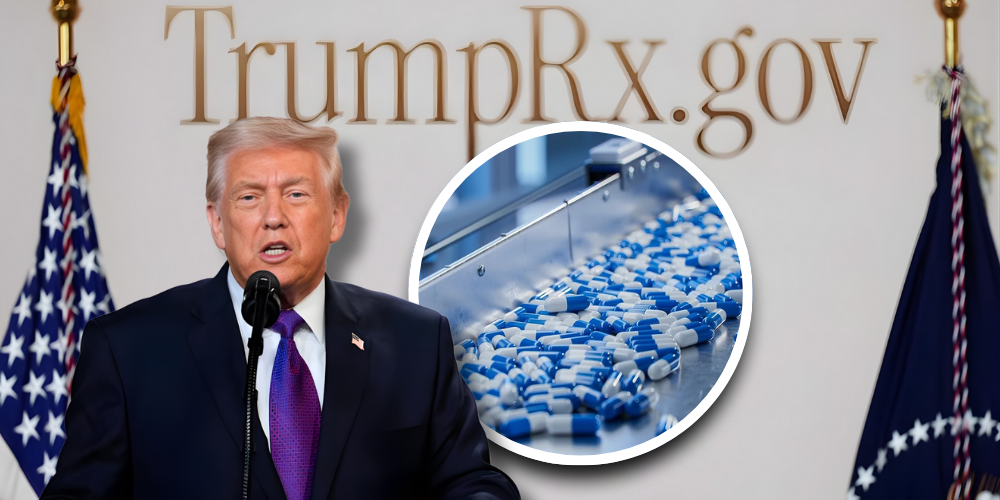
U.S. prescription prices have stayed far above global norms for years. On Feb. 5, The White House unveiled TrumpRx, a public portal built to surface cheaper options in one place.
Rather than changing insurance rules, the administration chose a consumer-facing shortcut that gathers discounts into a single dashboard. The launch signals a push to make prices visible before patients buy.
TrumpRx acts as a central hub that connects users to drugmakers’ direct-to-consumer platforms or provides printable pharmacy coupons. At launch, the site listed 43 medicines from AstraZeneca, Eli Lilly, EMD Serono, Novo Nordisk, and Pfizer, with more firms expected later. Several early listings spotlight GLP-1 drugs such as Ozempic, Wegovy, and Zepbound at sharply lower monthly prices than retail lists.
Advertised cuts are measured against retail list prices, not what insurers pay after rebates. Discounts run from roughly 33 percent to about 93 percent off list price. Xeljanz sits near the low end, Cetrotide near the high end, while many GLP-1 drugs land around “about half off.”
For instance, Ozempic drops from about $1,000 to roughly $199 per month. Wegovy’s list price of about $1,350 falls to a similar level. Zepbound moves from roughly $1,086 to about $299.
TrumpRx anchors President Donald Trump’s “Most Favored Nation” strategy. Participating companies agreed to lower prices, especially for Medicaid, and extend cash discounts through TrumpRx in exchange for tariff exemptions. The White House calls this one of the most significant prescription price resets in recent U.S. history.
Analysts caution that savings will vary by patient. Many list prices exceed what insurers pay after rebates, so some insured people already receive comparable deals. Purchases through TrumpRx generally do not count toward deductibles or out-of-pocket maximums, which limits their value for policyholders.
Experts say the site may matter most for uninsured patients and for drugs often excluded from coverage, including fertility medicines. Separately, three Democratic senators questioned the program’s legality over kickbacks and conflicts.