

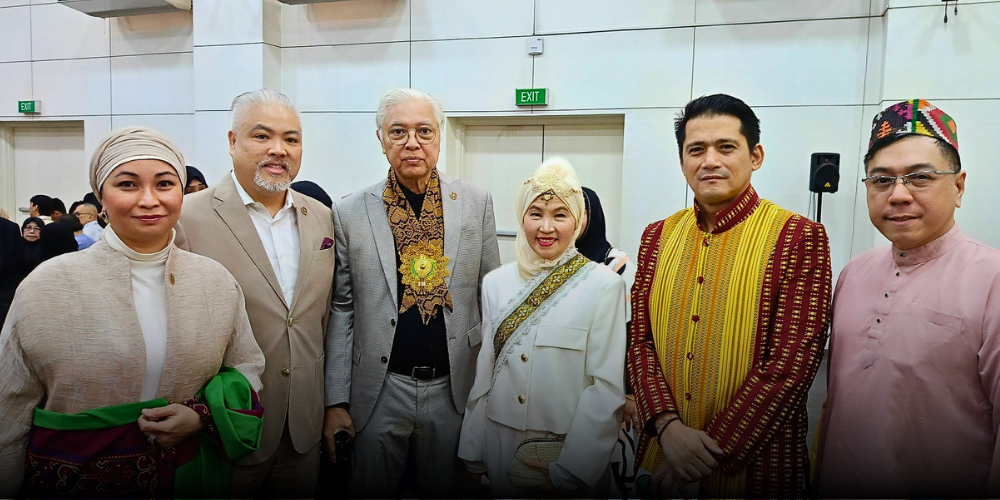
World Hijab Day was marked at the University of the Philippines Diliman with a public forum that brought together lawmakers, academics, women leaders, and civil society groups to examine how faith, identity, and dignity intersect in daily life. Held at the GT Toyota Asian Center Auditorium on February 2, 2026, the gathering moved the discussion beyond symbolism, grounding it in lived experience, policy, and institutional responsibility.
The forum, titled “Hijab and Dignity Faith Identity and Choice,” was organized by the UP Institute of Islamic Studies in partnership with the Office of Robin Padilla. It formed part of the observance of the National Day of Awareness on Hijab and Other Traditional Garments and Attire under Republic Act No. 12224. Conversations focused on how religious and cultural attire reflects personal choice, while also addressing the discrimination many hijabi women continue to encounter in public spaces, workplaces, and schools.
The program was emceed by Orion Perez D, who also joined the World Hijab Day activities at the Asian Center. His role highlighted the importance of media and public dialogue in shaping broader understanding of faith-based identity, especially beyond academic and legislative circles.
Panel discussions featured women leaders, advocates, and educators who shared initiatives and perspectives aimed at strengthening the implementation of Republic Act No. 12224. Speakers pointed to everyday barriers faced by Muslim women and emphasized that inclusion depends not only on legislation, but on consistent enforcement and institutional practice. The gap between legal recognition and on-the-ground experience emerged as a recurring theme throughout the forum.
Statements of solidarity from representatives of the academe, the legislature, and development sectors reinforced a shared position that protecting religious expression is inseparable from upholding dignity and equal participation. The hijab was framed not as an abstract symbol, but as a lived reality shaped by policy decisions, social attitudes, and accountability.
Around 400 participants attended the event, including representatives from the Senate and Congress, foreign embassies, national and local government agencies, civil society and interfaith groups, the Armed Forces of the Philippines, and the Philippine Coast Guard. The forum closed with a clear message. Respect grows through understanding. Inclusion is sustained through action. Diversity remains a shared strength.