

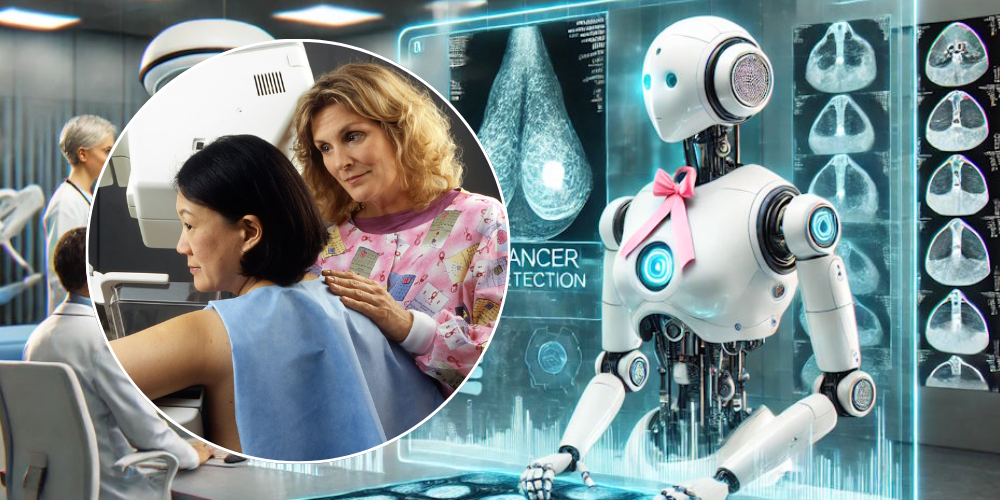
Artificial intelligence is transforming breast cancer detection, with a major study showing that AI-assisted screening helped doctors identify more cases during routine scans. This study, described as the world’s first completed randomized controlled trial on AI in breast cancer screening, offers new evidence on how AI can support overwhelmed radiology services.
The trial, conducted across Sweden in 2021 and 2022, involved over 100,000 women who underwent routine mammograms. Participants were randomly assigned to two groups. In one group, a single radiologist used AI assistance to review scans, while in the other, two radiologists reviewed scans independently using the standard European approach.
Results showed a 9% higher detection rate of breast cancer in the AI-assisted group compared to the control group. Additionally, the AI-assisted group had a 12% lower rate of interval cancers—those diagnosed between regular screenings. This improvement was consistent across different age groups and breast densities, with no significant difference in false positives between the two groups.
Published in The Lancet, the study underscores the growing interest in AI for medical image reading. A senior author from Lund University noted that AI-supported mammography could help alleviate radiologists’ workload while improving early detection. However, she emphasized that any large-scale implementation must be approached cautiously with continuous monitoring.
Experts caution that human expertise remains crucial. A French radiology official noted that AI could sometimes flag changes that aren’t cancer, while a UK cancer screening specialist called for longer follow-up to confirm whether the reduction in interval cancers is statistically significant.
Earlier trial results showed AI reduced the time radiologists spent reading scans by nearly half. The AI model used was trained on over 200,000 previous exams from 10 countries. With over 2.3 million women diagnosed with breast cancer globally in 2022, the study highlights the potential impact of even small improvements in detection.