
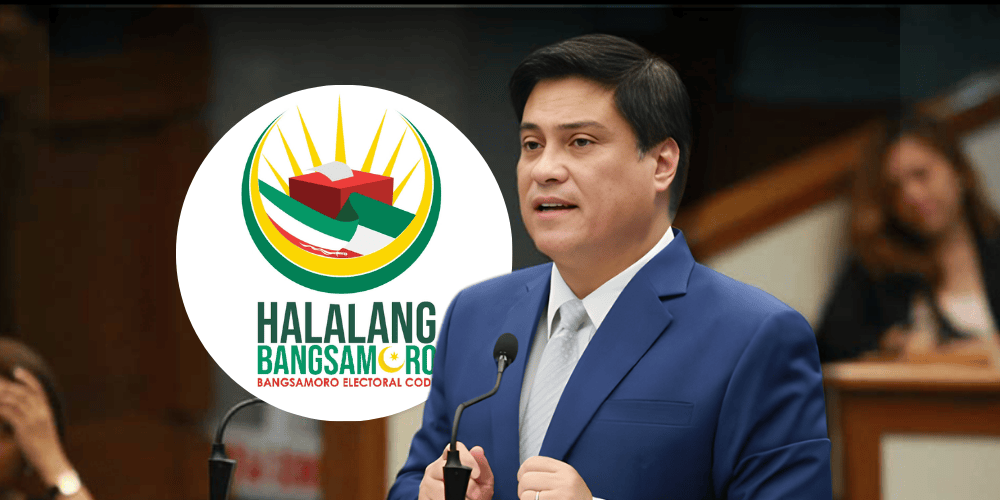
Senate Majority Leader Migz Zubiri is pushing for a reset of the Bangsamoro Autonomous Region in Muslim Mindanao’s long-delayed parliamentary elections, warning that continued postponements weaken the very idea of self-rule promised to the region.
Zubiri filed a measure setting the BARMM parliamentary elections on March 30, 2026, with elected officials scheduled to assume office a month later. The proposal also seeks to lock in a regular election cycle by aligning future Bangsamoro polls with the national and local elections beginning in 2028.
The senator said the absence of elections years after the region’s creation has deprived Bangsamoro residents of their most basic democratic function: choosing who governs them. He stressed that autonomy loses meaning when leadership remains appointed rather than elected.
BARMM was created in 2019 following a plebiscite that ratified the Bangsamoro Organic Law, a key outcome of the peace process in Mindanao. Since then, governance has been handled by the Bangsamoro Transition Authority, an interim body meant to operate only until an elected parliament could take over.
That transition, however, has stalled amid legal and structural complications. Zubiri pointed to recent developments that disrupted preparations for the polls, including court rulings that altered the region’s territorial composition and forced changes in parliamentary seat allocation. These shifts invalidated earlier redistricting plans and left election authorities without a clear legal framework to proceed.
According to Zubiri, the proposed reset is meant to provide certainty where confusion has persisted. By clearly defining election dates, transition limits, and institutional responsibilities, the bill aims to prevent further delays and ensure that voters finally take part in selecting their regional leaders.
Under the measure, the Commission on Elections would oversee the conduct of the polls through its Bangsamoro Electoral Office, working within existing election laws and the region’s own electoral code. The bill also makes clear that the Bangsamoro Transition Authority’s mandate ends once elected officials are proclaimed and qualified.
Zubiri underscored that the measure is not intended to prolong interim rule or favor any political group. Instead, he framed it as a corrective step to complete the democratic process envisioned when BARMM was established.
He also argued that synchronizing Bangsamoro elections with the national calendar would improve administrative efficiency, reduce uncertainty for voters, and strengthen the region’s political institutions over time.
With the proposed March 2026 date, the bill sets a firm target after years of shifting timelines. If passed, it would mark the first concrete move toward ending the prolonged transition period and replacing it with a fully elected Bangsamoro parliament.
For Zubiri, the issue goes beyond scheduling. He said the credibility of autonomy itself depends on whether the Bangsamoro people are finally allowed to exercise their right to choose who leads them.