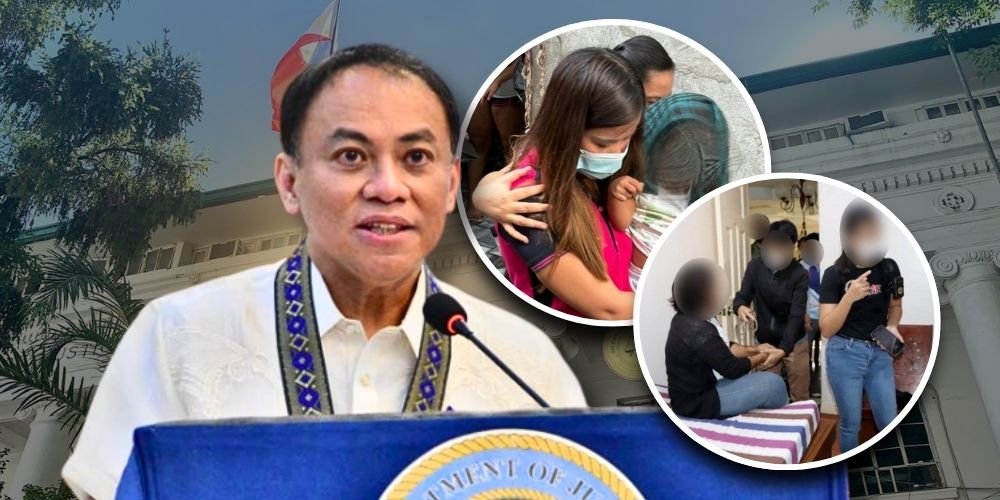
The Department of Justice (DOJ) is moving forward with efforts to enhance laws targeting human trafficking and child exploitation, responding to the growing complexity and reach of criminal activities fueled by technology.
PGMN’s newest journalist and child protection advocate, Breanna Espina, sheds light on the stark reality of child trafficking in the Philippines. In her research, Espina reveals that exploitation occurs openly—within homes, neighborhoods, and online—driven by poverty and technology. Despite global recognition of the Philippines’ anti-trafficking efforts, Espina stresses that the system has failed to address the scale of the issue. She calls for stronger funding, faster legal proceedings, and better international enforcement to protect vulnerable children from exploitation. Espina also emphasizes the gaps in the current system and the need for stronger enforcement.
As the Philippines advances in taking concrete steps to close these gaps and improve the legal response to human trafficking and child exploitation, DOJ officials, led by Secretary Fredderick Vida, met with Senator Loren Legarda to explore ways to strengthen existing legislation, including Republic Act (RA) 9208, which addresses human trafficking, and RA 11930, focused on the protection of children from exploitation. The discussions centered on how to counter increasingly sophisticated, technology-driven schemes and cross-border trafficking networks.
A key point of the meeting was the promotion of the Expanded Anti-Online Sexual Abuse and Exploitation of Children (OSAEC) and Child Sexual Abuse or Exploitation Materials (CSAEM) Bill. This bill is a priority for the current administration and aims to provide stronger legal frameworks to combat child sexual exploitation in the digital space.
The DOJ has also proposed various measures to tighten border control and improve monitoring sstems. These include enhanced vessel registration protocols, maritime surveillance, and more rigorous oversight of migration corridors frequently targeted by traffickers. The DOJ emphasized the importance of improving coordination between key agencies, particularly the Inter-Agency Council Against Trafficking (IACAT) and the National Coordination Center Against OSAEC and CSAEM, to ensure a faster and more unified response to these crimes.
Secretary Vida stressed that the DOJ is committed to advancing adaptive laws to address gaps in the current criminal justice system. “We’re pushing for adaptive laws to seal gaps in our criminal justice system, ensuring every victim, especially women and children, is protected by the rule of law,” Vida stated.