

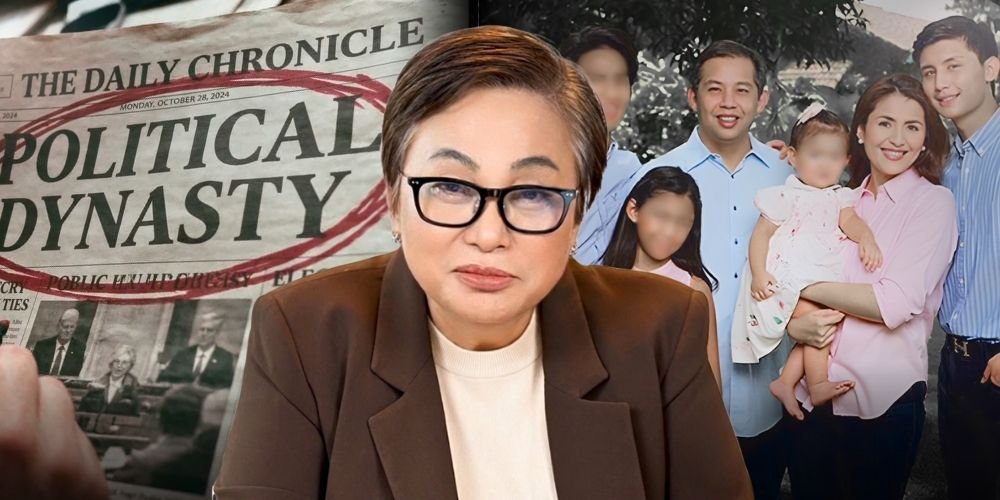
In the latest PGMN episode, PGMN Anchor Atty. Rowena Guanzon delivered a hard-hitting analysis of how political dynasties continue to dominate Philippine politics, using loopholes in the party-list system to expand their influence beyond traditional districts.
Watch the full episode here:
Atty. Guanzon explained that while the 1987 Constitution introduced a multi-party system to broaden political participation, it also weakened party oversight, allowing political families to secure positions with minimal vetting. Article II, Section 26 of the Constitution mandates the prohibition of political dynasties “as may be defined by law,” yet nearly four decades later, no enabling legislation has been enacted.
She highlighted how the party-list system, intended to give marginalized sectors a voice in Congress, has been exploited by some families to gain additional seats. Citing concrete examples, Atty Guanzon pointed to cases where family members simultaneously hold district and party-list positions, consolidating both influence and access to public funds. According to the Philippine Center for Investigative Journalism, over half of party-list seats are currently held by representatives linked to political dynasties.
Guanzon also raised concerns over electoral vulnerabilities such as vote-buying, weak enforcement of term limits, and strategic substitutions of nominees, all of which favor established families while hindering new entrants. She warned that narrow definitions in proposed anti-dynasty legislation allow extended family members to retain power, further undermining reform efforts.
“Everything boils down to power and money,” Atty Guanzon said, stressing that meaningful change requires both institutional reform and active voter vigilance. The episode comes ahead of the 2028 elections, urging the electorate to critically evaluate candidates and challenge the structures that keep the same families in control.