


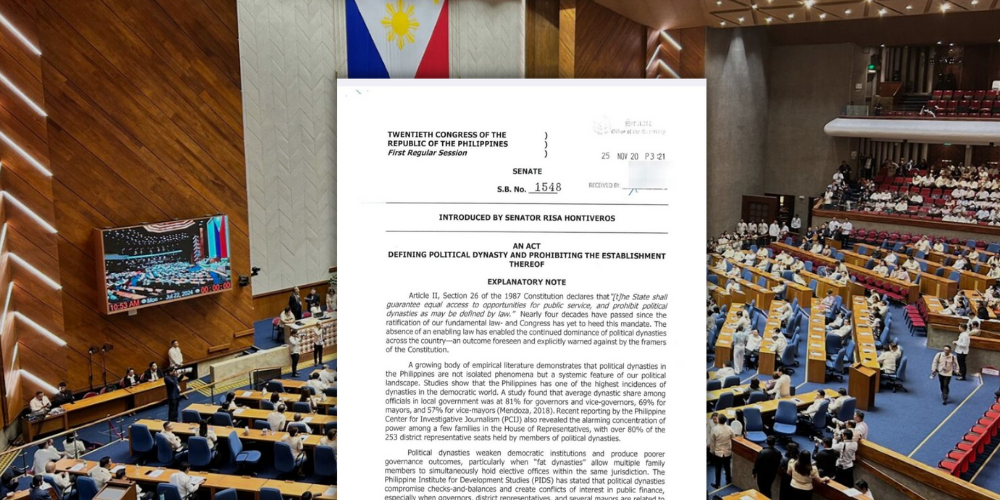
For nearly four decades, the constitutional ban on political dynasties has existed only on paper. On Tuesday, the House of Representatives takes its first formal step this Congress toward turning that prohibition into law.
The House committee on suffrage and electoral reforms will begin deliberations on more than 20 anti-political dynasty bills, signaling renewed pressure to curb the concentration of power among a small number of political families. Committee chair Zia Alonto Adiong said the goal is to finally produce a measure that gives legal teeth to the 1987 Constitution’s long-unimplemented provision.
“As Chairperson, I am fully committed to ensuring that the committee’s deliberations produce a version of the Anti-Political Dynasty Bill that is effective, legally sound, and constitutionally compliant,” Adiong said. “We will harness the collective wisdom of our distinguished resource persons to craft a measure that genuinely promotes equitable political participation, upholds meritocracy, and strengthens Philippine democracy.”
To address past objections that stalled similar efforts, the committee has invited former Supreme Court chief justices, constitutional framers, senior jurists, election officials, and legal organizations to the initial hearing. Lawmakers pushing the reform say constitutional clarity is central to preventing another cycle of symbolic debates without legislative outcome.
The renewed push follows a series of anti-dynasty proposals filed in 2025 by both minority and majority lawmakers, including some members of political families who argue that unchecked dynastic dominance limits voter choice and discourages new candidates from entering politics. President Bongbong Marcos has urged Congress to prioritize the measure as part of broader political reforms.
Whether the renewed talks lead to passage remains uncertain. What is clear is that the issue has again moved from rhetoric to formal deliberation, a test of whether Congress is prepared to act on a constitutional mandate aimed at widening political access beyond entrenched family rule.