

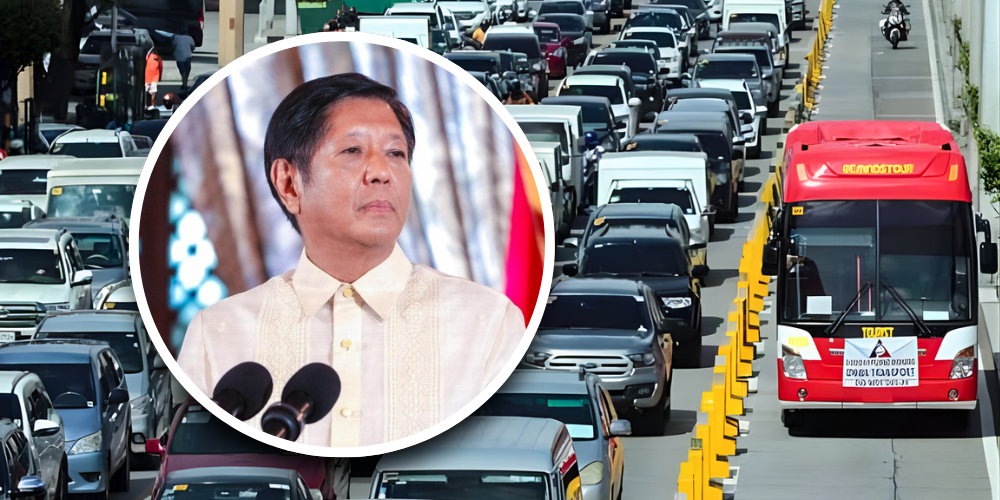
President Ferdinand Marcos Jr. has given initial approval to a proposal that would extend the validity of registration for new motor vehicles from three years to five years, a move that could reduce the frequency of renewals for vehicle owners once formally implemented. The development was confirmed Tuesday following a meeting between the President and officials of the Department of Transportation at Malacañang.
Presidential Communications Office Undersecretary Claire Castro said the proposal was raised by Transportation Secretary Giovanni “Banoy” Lopez, who presented the benefits of lengthening the registration period for newly registered vehicles. Marcos, she said, agreed in principle with the recommendation. The approval remains preliminary and will still require formal memoranda to be issued by the DOTr before the change can take effect.
Castro did not specify when the new registration validity would be enforced, noting that the necessary issuances are still being prepared. Until these are released, existing rules governing vehicle registration remain in force.
The discussion on vehicle registration formed part of a broader briefing on the government’s transport agenda. Lopez also updated the President on ongoing improvements to the country’s railway system, including upgrades aimed at improving commuter experience and system reliability.
Among the projects cited were the rehabilitation of facilities at the MRT Quezon Avenue Station, the continued implementation of cashless payment systems on MRT-3, and the planned introduction of cashless payments on LRT-1 and LRT-2. Updates were also provided on major rail developments outside Metro Manila.
Partial operations of the North–South Commuter Railway are expected to begin in 2027 for the Valenzuela–Malolos segment, with the Malolos–Clark route targeted for 2028. The DOTr also reported that partial operations of MRT-7 are planned for 2027. The Metro Manila Subway, meanwhile, is scheduled for a demonstration run in 2028, with full operations expected by 2033.
Marcos reiterated his directive to prioritize commuter welfare, stressing the need for clean and well-ventilated transport facilities and reliable train services that operate on time, as transport policies and infrastructure projects continue to move forward.