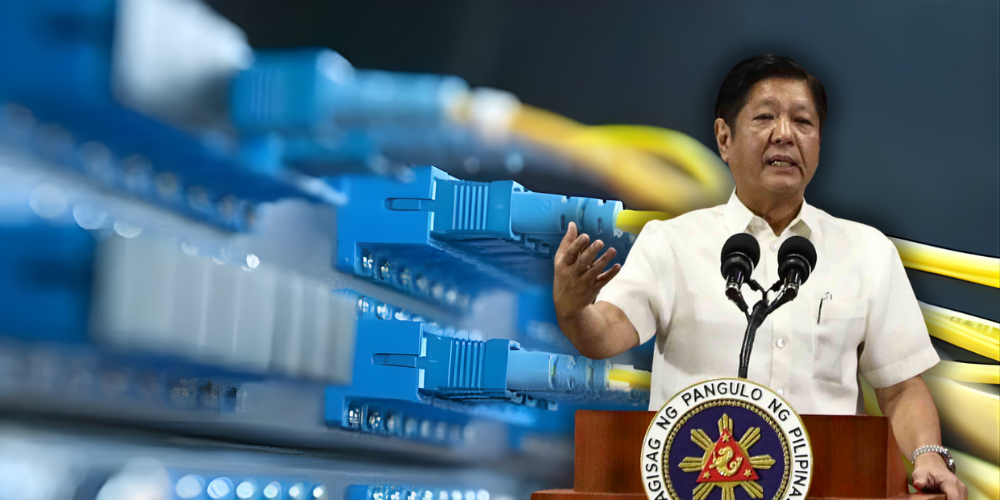
President Bongbong Marcos has approved the country’s first National Digital Connectivity Plan, a government blueprint intended to accelerate broadband expansion, bring down internet costs, and widen access to secure digital services across the Philippines.
The plan, known as the NDCP, was finalized after a consultative process that began in early 2024, according to Presidential Communications Office Acting Secretary Dave Gomez. The framework sets the administration’s direction on digital infrastructure as the Philippines works to close long standing gaps in internet speed, coverage, and affordability.
Gomez said the plan “envisions a Digitally Connected Philippines – one where connectivity is meaningful, inclusive, and transformative, anchored on universal access, affordability, higher speeds, and secure digital services for all Filipinos.”
Under the NDCP, the government outlined four strategic pillars that will guide implementation. These include strengthening governance and the regulatory framework to liberalize the telecommunications sector and promote competition, expanding universal access to ensure that geographically isolated and disadvantaged communities are not left behind, accelerating infrastructure rollout by leveraging public private partnerships, and safeguarding digital infrastructure against climate risks, disasters, and cybersecurity threats.
Gomez said the President acknowledged that the Philippines has fallen behind some of its Southeast Asian neighbors, many of which adopted similar national connectivity strategies as early as ten years ago.
“But with technology now more advanced and at less cost, he is confident we will soon be at par in terms of connectivity, speed and cost,” the PCO chief said.
The approval of the NDCP establishes a unified national framework to align policy, regulation, and investment around digital connectivity, positioning internet access as a central pillar of economic growth, public service delivery, and national development.