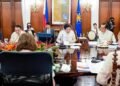


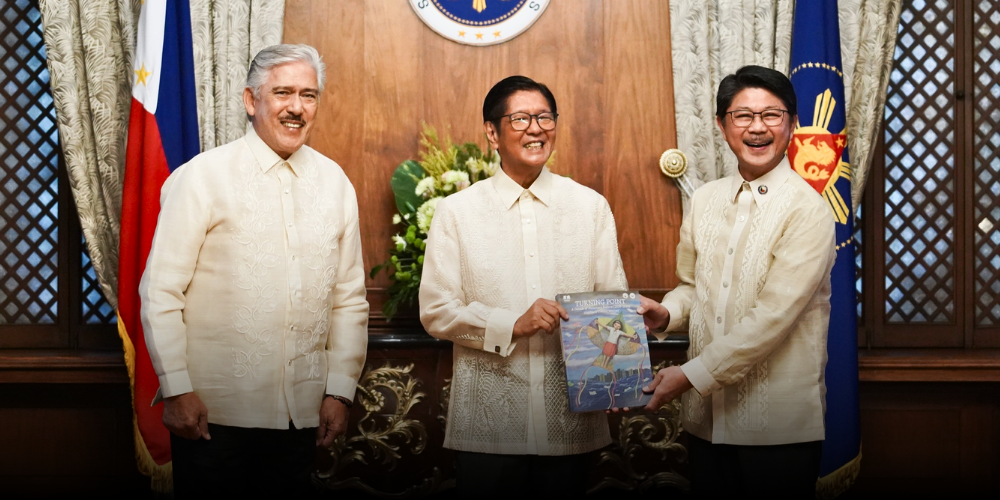
A decade-long plan aimed at reshaping Philippine education was formally placed before the President this week, as the Second Congressional Commission on Education submitted its National Education and Workforce Development Plan in Malacañang. The document, turned over alongside the commission’s final report, outlines reforms designed to outlast a single political term.
The presentation marked President Bongbong Marcos’ return to a live public event following his recent hospitalization for diverticulitis. Speaking at the ceremony, he framed the plan as a response to structural problems that cannot be solved within short political timelines. He said the findings in the commission’s report point to a learning crisis that requires sustained attention and continuity in policy.
Rather than a single set of quick fixes, Marcos described the effort as one that depends on coordination across government, schools, industries, and local communities. He stressed that progress would rely on steady implementation and shared responsibility, rather than isolated programs.
According to the President, the roadmap builds on reforms already underway, particularly efforts aimed at addressing the setbacks students experienced during the pandemic. Measures outlined include changes to the basic education curriculum, efforts to fill vacant teaching and non-teaching positions, expanded career pathways for educators, and improved access to digital tools and internet connectivity in schools.
Marcos also pointed to the scale of government spending behind the plan. For 2026, he said ₱1.3 trillion has been allocated for education, an amount he noted surpasses global benchmarks for education investment for the first time in Philippine history. He said the funding will support teacher hiring, learning recovery programs in reading, mathematics, and science, wider school-based feeding initiatives, and the construction of additional classrooms.
He said these steps are meant to reinforce gains already made and ensure that students receive the level of education they are entitled to expect. After the EDCOM II event, Marcos also attended the farewell call of the United States ambassador to the Philippines and an engagement related to the ASEAN Business Advisory Council chairmanship as he continued his recovery.