

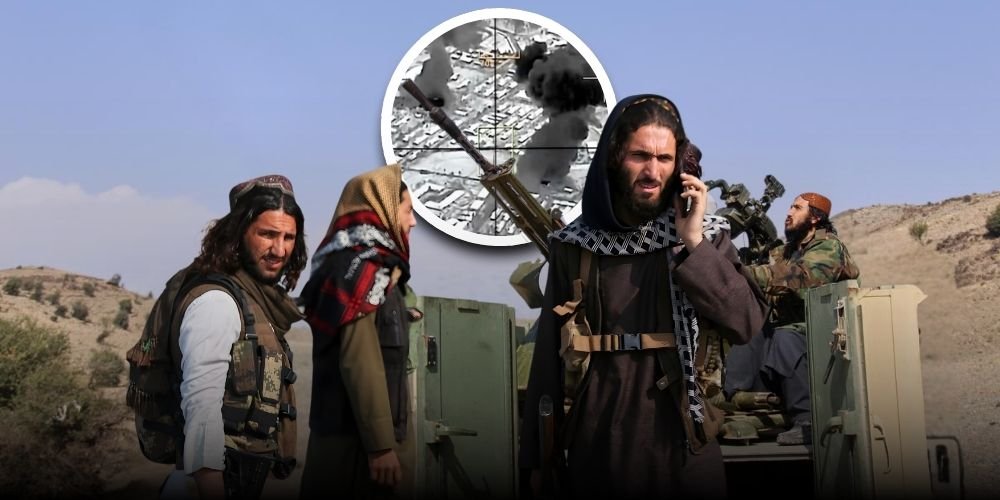
Pakistan launched strikes on major Afghan cities, including the capital Kabul, as its defence minister declared the country is now in “open war” with Afghanistan following escalating cross-border clashes.
The escalation follows retaliatory attacks along the frontier, with both sides accusing each other of initiating violence. Afghan forces targeted Pakistani border troops in response to earlier Pakistani airstrikes on Afghan territory, triggering a sharp expansion of military action.
In a post on X, Defence Minister Khawaja Mohammad Asif said Pakistan’s “patience” had run out, stating, “Our patience has now run out. Now it is open war between us.”
The declaration comes amid ongoing exchanges of fire and military strikes across the border. Both militaries said they killed dozens of soldiers in the latest round of violence, though those figures could not be independently verified.
Asif said Pakistan had hoped for stability in Afghanistan after the withdrawal of NATO forces and expected the Taliban to focus on internal governance and regional security. Instead, he alleged that the Taliban had turned Afghanistan “into a colony of India,” gathered militants from around the world and begun “exporting terrorism.”
Pakistan has frequently accused neighbouring India of backing the outlawed Baloch Liberation Army and the Pakistani Taliban, allegations New Delhi denies.
Relations between Islamabad and Kabul have deteriorated in recent months. Land border crossings have largely remained shut since deadly fighting in October that killed more than 70 people on both sides.
Islamabad accuses Afghanistan of failing to act against militant groups that carry out attacks inside Pakistan, an allegation the Taliban government denies.
Several rounds of negotiations followed an initial ceasefire brokered by Qatar and Turkey, but those efforts failed to produce a lasting agreement. Saudi Arabia later intervened to mediate the release of three Pakistani soldiers captured during earlier clashes.
The escalation unfolds amid broader instability in the region. In recent months, both countries have experienced deadly suicide attacks, including a bombing at a Shiite mosque in Islamabad that killed at least 40 people and was claimed by the Islamic State group. Its regional affiliate, Islamic State-Khorasan, also claimed responsibility for a deadly bombing at a restaurant in Kabul.
Tensions have also been compounded by Pakistan’s 2023 crackdown on undocumented migrants, which has driven millions across the border into Afghanistan. The UN refugee agency said 2.9 million people returned to Afghanistan last year, with nearly 80,000 returning so far this year.
Afghan government officials had not publicly responded to Asif’s “open war” statement at the time of reporting.