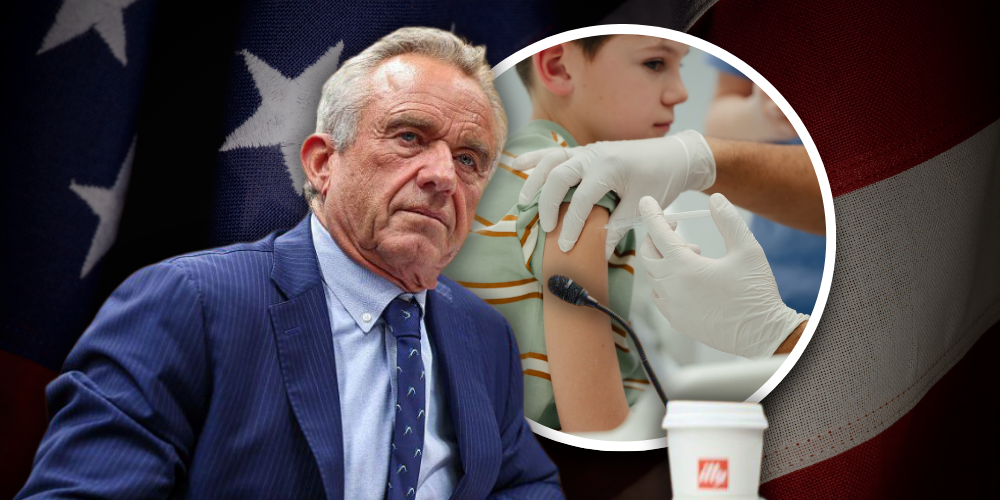
U.S. health authorities have revised the national childhood immunization policy, narrowing the list of diseases covered by routine vaccinations as part of an effort to reduce the number of shots children receive during early development.
The change follows a directive from Health Secretary Robert F. Kennedy Jr. to reassess long-standing vaccination recommendations. Federal officials said the goal is to simplify the immunization schedule, limit injections at certain ages, and shift some vaccines from universal use to risk-based guidance.
The Centers for Disease Control and Prevention updated its official immunization schedule, which took effect immediately. Several vaccines once recommended for all children are now advised only for specific age groups, medical conditions, or higher-risk situations.
Vaccines affected include those for respiratory syncytial virus, rotavirus, hepatitis A, meningococcal disease, human papillomavirus, influenza, and Covid-19. Officials emphasized that these vaccines remain available and may still be given based on medical assessment and shared decision-making.
Core childhood vaccines remain unchanged. Immunizations for polio, diphtheria, tetanus, pertussis, measles, mumps, rubella, and chickenpox continue to be recommended as standard pediatric care.
Health officials described the move as a recalibration of policy, not a withdrawal of vaccines, marking one of the most significant shifts in U.S. vaccination guidance in recent years.