


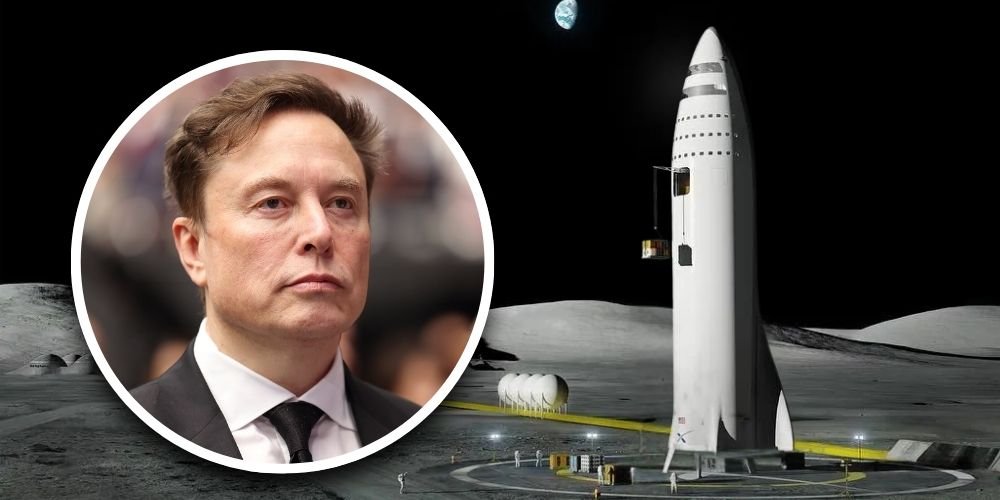
SpaceX is shifting its immediate focus from Mars to the Moon, with founder Elon Musk saying the change reflects what the company can realistically achieve sooner. In recent remarks, Musk said building a sustained human presence on the Moon is now the clearer priority, citing shorter timelines and more manageable logistics.
“For those unaware, SpaceX has already shifted focus to building a self-growing city on the Moon, as we can potentially achieve that in less than 10 years, whereas Mars would take 20+ years,” he said.
The statement signals a strategic adjustment rather than a retreat from Mars, placing emphasis on near-term feasibility.
Musk pointed to the Moon’s proximity as a key factor behind the shift. He said SpaceX can conduct missions more frequently, which allows faster testing and refinement of its systems.
“We can launch to the Moon every 10 days,” he added, underscoring how regular launches could accelerate progress compared with Mars missions that require long travel times and narrow launch windows. Frequent lunar flights, Musk suggested, would help SpaceX develop the technology and operational experience needed for more ambitious goals later on.
The renewed focus on the Moon marks a contrast with earlier projections Musk made more than a decade ago. In a 2011 interview with The Wall Street Journal, he said SpaceX astronauts could reach Mars in “Best case, 10 years, worst case, 15 to 20 years.” That timeline reflected an aggressive push toward interplanetary travel.
His more recent comments indicate that those estimates have been reassessed, with greater weight now given to the practical challenges involved in reaching and sustaining life on Mars.
While Mars remains part of SpaceX’s long-term vision, the Moon is now being framed as a critical stepping stone. Musk’s comments suggest that establishing a lasting presence closer to Earth could help build the systems, experience, and scale needed for future deep-space missions.
By prioritizing what can be done sooner, SpaceX appears to be reshaping its roadmap while keeping its broader goal of expanding human presence beyond Earth in view.