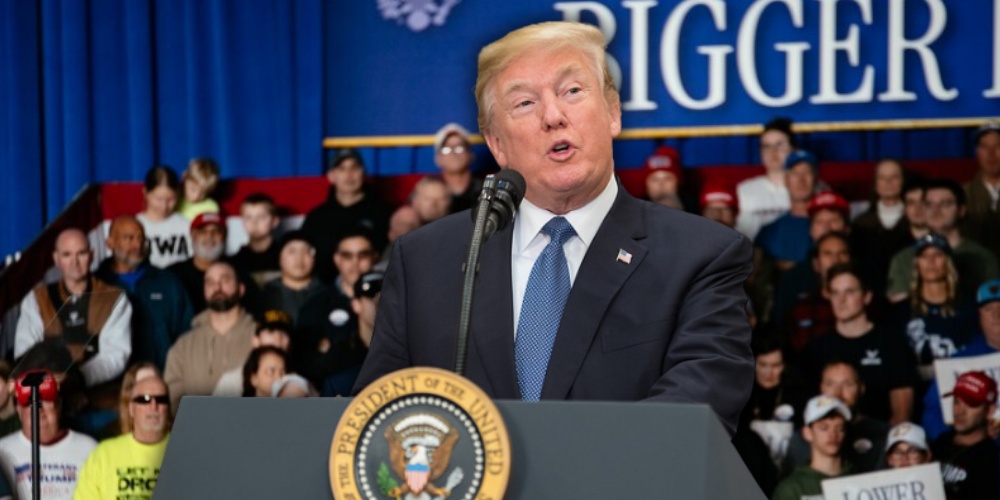
President Donald Trump opened his midterm campaign in Iowa with a clear warning and a focused message, framing the coming elections as a decisive moment for his presidency and the direction of Congress. Speaking at a rally in Clive, Trump told supporters that Republicans must retain control of both the Senate and the House in November, arguing that a loss would threaten core policies and stall his agenda.
Trump said he was launching the midterm push in Iowa not simply out of personal affection for the state, but to begin what he described as a necessary fight to win the elections. He warned that losing the midterms would put tax cuts and other priorities at risk and said the consequences could lead to “very bad things.” The remarks marked the start of an aggressive travel schedule, with the White House saying the president will make weekly trips across the country as the campaign intensifies.
The president centered much of his speech on the economy, repeating his claim that the United States is entering a “Golden Age” and insisting that prices are falling for most goods. His team has increasingly highlighted affordability as polls show rising voter frustration over economic pressures one year after his return to power. Trump also acknowledged the challenge of midterm elections, noting that voter attitudes can shift quickly even when a president believes his policies are delivering results.
Events beyond Iowa loomed over the rally. Trump had told Fox News earlier that he would “de-escalate a little bit” following a fatal shooting involving federal agents in neighboring Minnesota, though he largely avoided the issue in his remarks. Protesters disrupted his speech at least twice, which Trump dismissed as the actions of “sickos” and “paid insurrectionists.”
Despite criticizing opinion polls, Trump remained defiant. A recent New York Times/Siena poll placed his approval rating at 40 percent. As new data showed consumer confidence dropping to its lowest level since 2014, Trump pressed forward, signaling that he intends to confront economic anxiety directly while making the midterms a defining test of his second term.